A quieter night can be easy to miss when you are exhausted. Your partner may say you seemed better, but were you quieter all night, or only after 3am? And if you are trying a new anti-snoring solution, how do you know whether it is helping rather than simply having a good night by chance?
Learning how to track snoring progress gives you a clear answer. You do not need a laboratory, expensive equipment or pages of complicated data. A simple baseline, consistent notes and honest partner feedback will show whether your snoring is changing in ways that matter: less noise, fewer disruptions and more rested mornings.
Start with a baseline, not a guess
Before changing anything, track your usual sleep for five to seven nights. This is your baseline. Snoring naturally varies from one night to the next, often affected by tiredness, alcohol, a cold, allergies, sleeping position and late meals. One silent night is encouraging, but it is not proof that a remedy has worked.
Use the same method each night. If you record audio with a mobile phone, place it in roughly the same spot beside the bed. If your partner rates the noise, ask them to use the same scale each morning. Consistency matters more than collecting lots of information.
For every night, make a short note of when you went to bed, when you woke up and anything that might have affected your sleep. Keep it realistic. The point is not to turn bedtime into a project. It is to spot a pattern you can trust.
Choose measurements that reflect real progress
The best tracking combines what a recording captures with how sleep feels for you and your partner. Apps and recordings can be useful, but they cannot tell the whole story. A mobile phone may mistake traffic, a fan or a partner’s movement for snoring. Likewise, a low snore score does not mean much if your partner was repeatedly woken by a few very loud episodes.
Track frequency and loudness
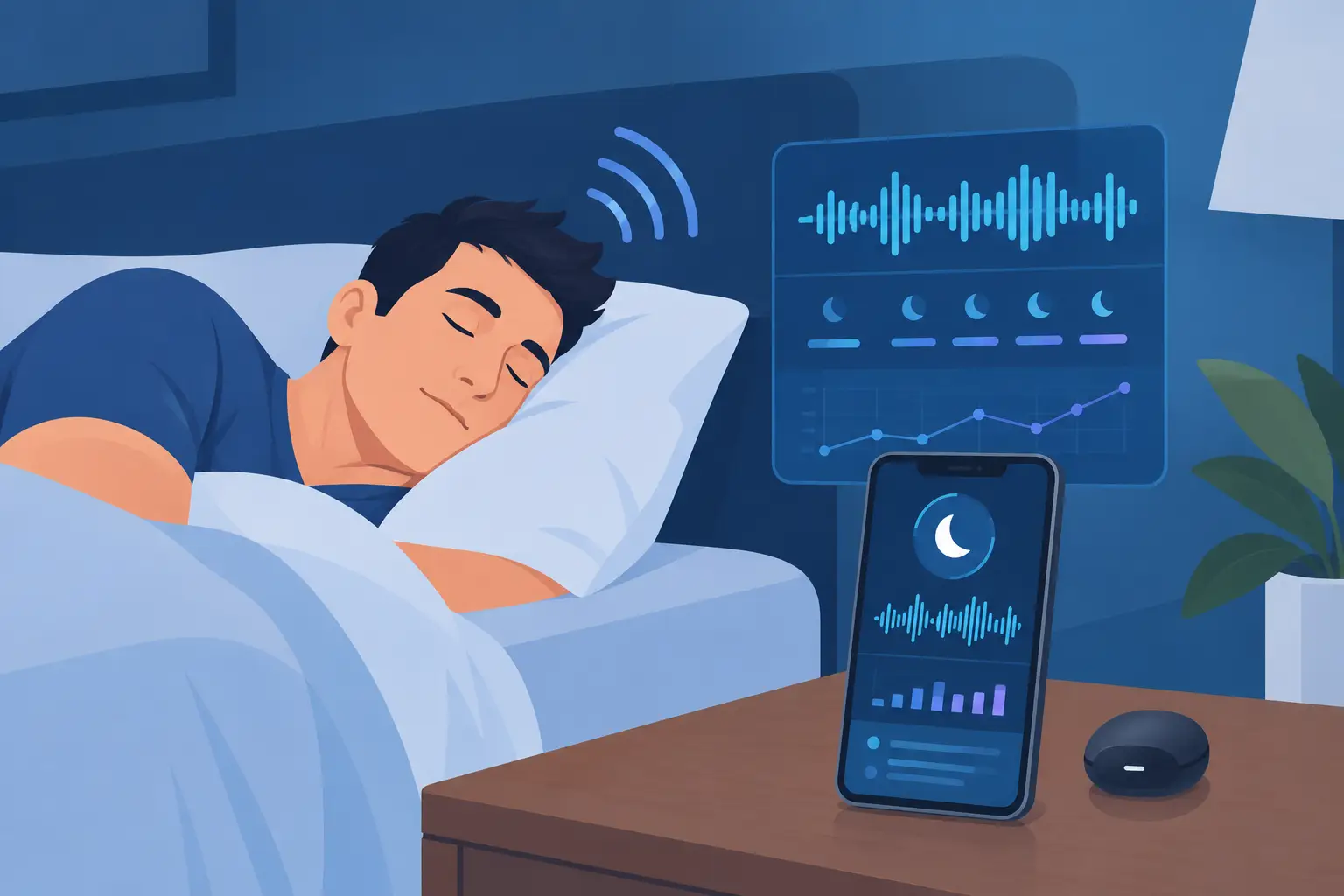
If you use a snoring-recording app or audio recorder, look at two simple measures: how often you snored and how loud it was. You may notice fewer recorded snoring events, shorter episodes or less time spent at higher volumes.
Do not obsess over a single number. Different apps use different microphones, sensitivity settings and scoring systems. Compare your own results from one night to the next using the same device, in the same room, rather than comparing your score with somebody else’s.
A plain 0-to-5 rating works well too. Zero means no snoring noticed; five means loud, frequent snoring that repeatedly disturbed sleep. Your partner can rate the night in seconds. Over a fortnight, the average tells a much more useful story than any one score.
Track interruptions, not just sound
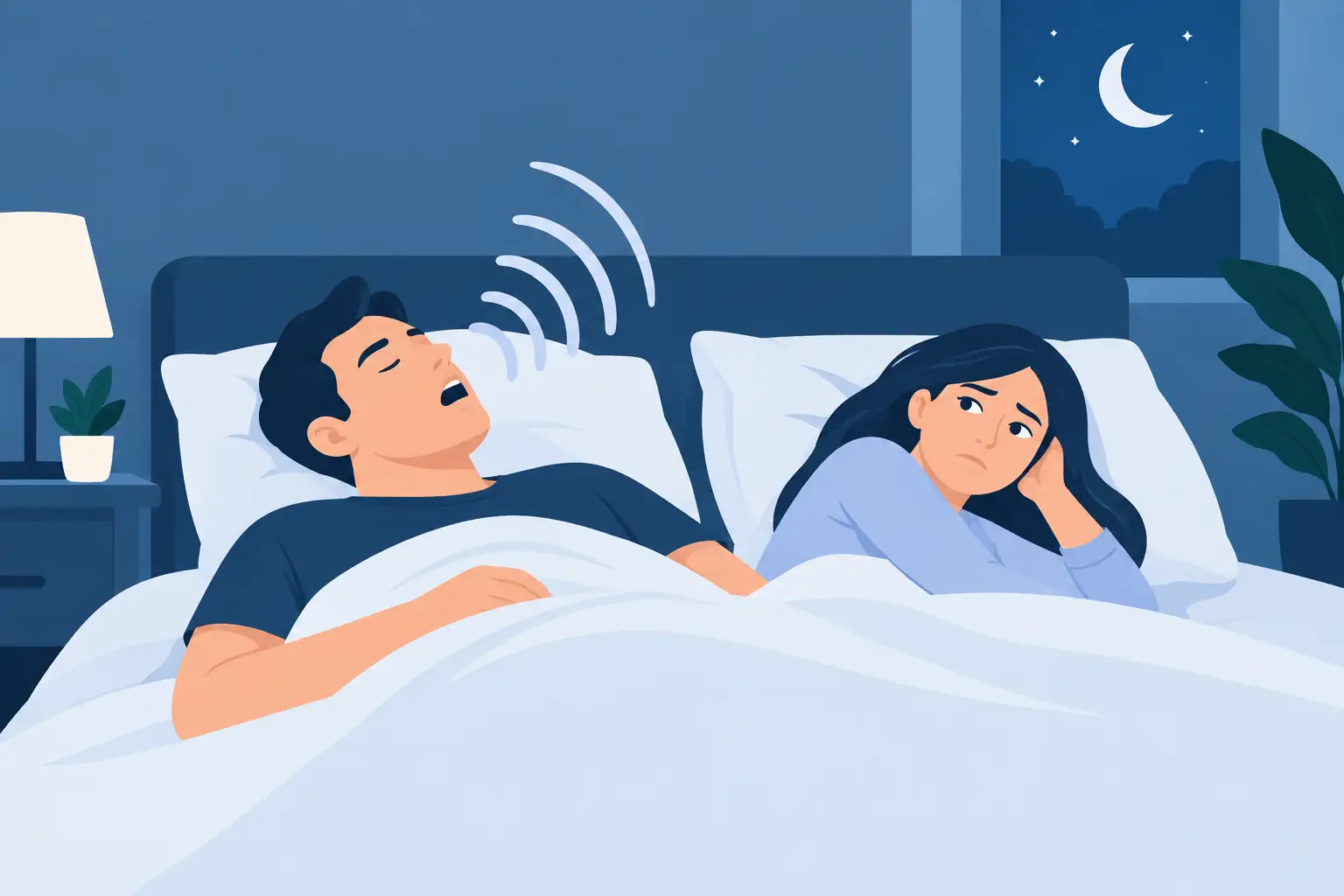
Snoring is often most frustrating because of what it does to the person beside you. Ask your partner whether they woke up because of your snoring, moved to another room or needed to nudge you to change position. These are meaningful markers of progress.
You can also record whether you woke yourself, woke with a dry mouth, felt unrefreshed or experienced morning headaches. These symptoms have several possible causes, so they do not prove that snoring is the issue. However, they add valuable context to the sound data.
Track the next morning
A good anti-snoring approach should fit into real life. Each morning, rate your own sleep quality and your partner’s sleep quality from 1 to 5. Then note your daytime energy in a word or two: refreshed, average or drained.
This helps prevent a common mistake: chasing quieter recordings while ignoring comfort. A solution that looks good on an app but leaves you uncomfortable, restless or unable to sleep properly may not be the right fit for you.
Keep a simple snoring progress diary
Your diary can live in a notebook or your mobile phone notes. It should take less than two minutes in the morning. Record the date, snoring rating, number of partner disruptions, your sleep quality and anything unusual, such as alcohol, congestion or sleeping on your back.
For example, you might write: “Tuesday: snoring 2/5, no nudges, both slept well, late dinner, used ring.” That is enough. You are building a useful record, not writing a sleep memoir.
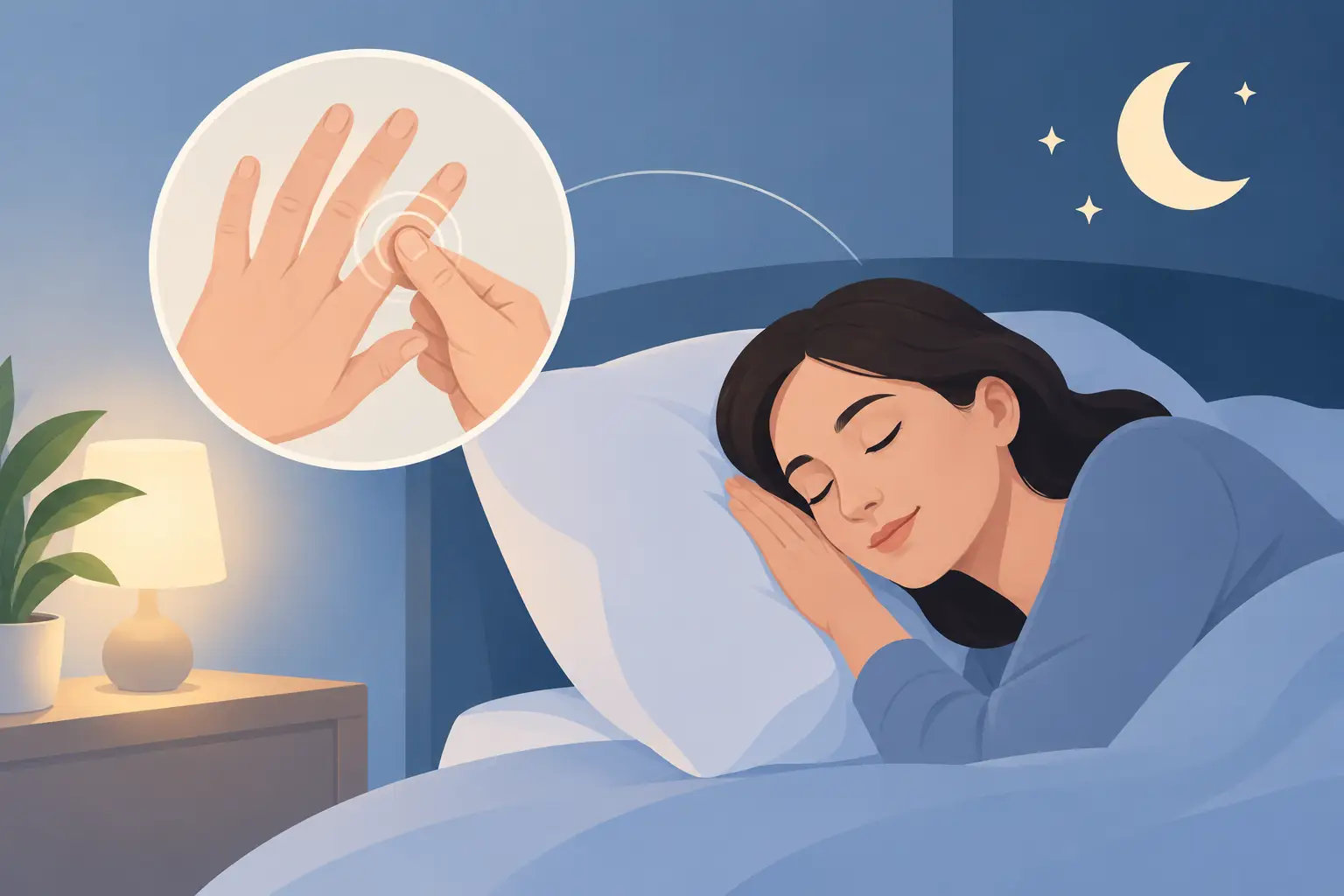
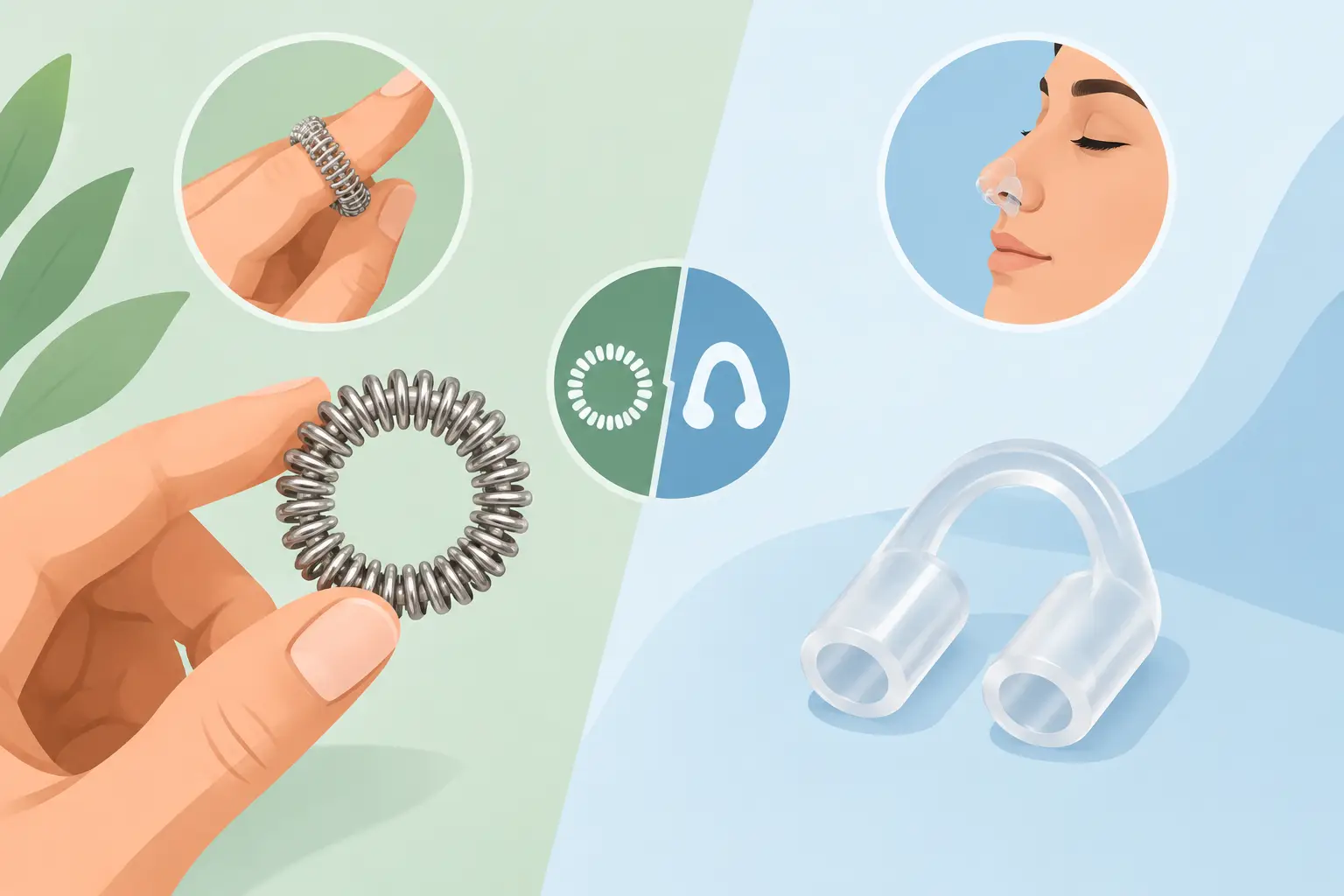
If you are testing an anti-snoring product, add whether you used it correctly and for the full night. With a finger-based acupressure ring, that means noting which little finger it was worn on and whether it remained comfortable until morning. A result is hard to interpret if the product was only worn for part of the night or was fitted inconsistently.
Test one change at a time
It is tempting to change everything at once: buy a new remedy, stop drinking, use nasal strips, sleep on your side and replace your pillow. You may sleep better, but you will not know which change made the difference.
After your baseline week, introduce one main change and keep tracking for at least seven to 14 nights. That gives your routine time to settle and reduces the risk of judging it on an unusually easy or difficult night.
Some factors cannot be controlled. Seasonal allergies, a head cold or a stressful week may temporarily make snoring worse. Do not treat that as failure. Simply note it, continue the trial and look at the broader trend.
For people looking for a discreet, non-invasive option, the Good Night Anti-Snoring Ring is designed to be worn during sleep and applies acupressure to points on the little finger. It is the original clinically trialled stop snoring ring, but no solution works for every person. Tracking honestly is how you decide whether it is making a worthwhile difference for your nights.
Review weekly, not emotionally every morning
Bad nights tend to stick in the mind. So do unusually quiet ones. A weekly review is more reliable than making a verdict at breakfast.
At the end of each week, compare your average snoring rating with your baseline. Look at how many times your partner was disturbed and whether either of you feels better rested. A meaningful improvement might be a move from frequent 4/5 nights to mostly 1/5 or 2/5 nights, fewer nudges and fewer mornings when your partner feels they have barely slept.
Progress is not always a straight line. You may see clear improvement on ordinary nights but more snoring after drinks, during a cold or when sleeping on your back. That still tells you something useful. It shows where your solution helps and which triggers may need extra attention.
Know when snoring needs medical assessment
Simple snoring can be disruptive without being dangerous, but loud snoring can sometimes be linked with obstructive sleep apnoea. An anti-snoring product should not be used as a reason to ignore warning signs.
Speak to your GP if you or your partner notice pauses in breathing, gasping or choking during sleep, severe daytime sleepiness, morning headaches, high blood pressure or difficulty concentrating. These symptoms do not automatically mean sleep apnoea, but they deserve proper assessment. Recording a few examples and bringing your sleep diary can make that conversation more useful.
Give your results a fair reading
The goal is not perfect silence every night. The goal is better sleep for both people in the bed. If the recordings are quieter, your partner is being woken less often and you both feel more rested after two consistent weeks, you have evidence that your approach is helping.
If there is no worthwhile change, that is useful information too. It means you can try a different approach, check your technique or seek medical advice rather than spending months hoping for a result. Keep the diary simple, trust the pattern over the occasional bad night, and let better mornings be the measure that counts.