A busy mind, a tense jaw and a partner’s snoring can turn bedtime into a nightly negotiation. This guide to acupressure sleep points explains a simple, drug-free practice you can try before bed – with realistic expectations about what it can and cannot do.
Acupressure uses steady finger pressure on specific areas of the body traditionally associated with relaxation, tension release and sleep. It is not a replacement for medical care, and it will not solve every cause of poor sleep. But for people whose evenings are disrupted by stress, restlessness or simple snoring, it can be a calm, practical part of a better routine.
What acupressure sleep points can realistically do
The appeal of acupressure is straightforward: no tablets, no complicated equipment and no need to change your whole evening. You locate a point, apply gentle, consistent pressure and give yourself a few quiet minutes to slow down.
Some people find the ritual itself helps them switch gears before sleep. Others notice less muscle tension or feel more settled when they wake during the night. Results vary, because insomnia, disrupted sleep and snoring have many possible causes. Caffeine, alcohol, stress, nasal congestion, sleep position, weight, medication and underlying health conditions can all play a part.
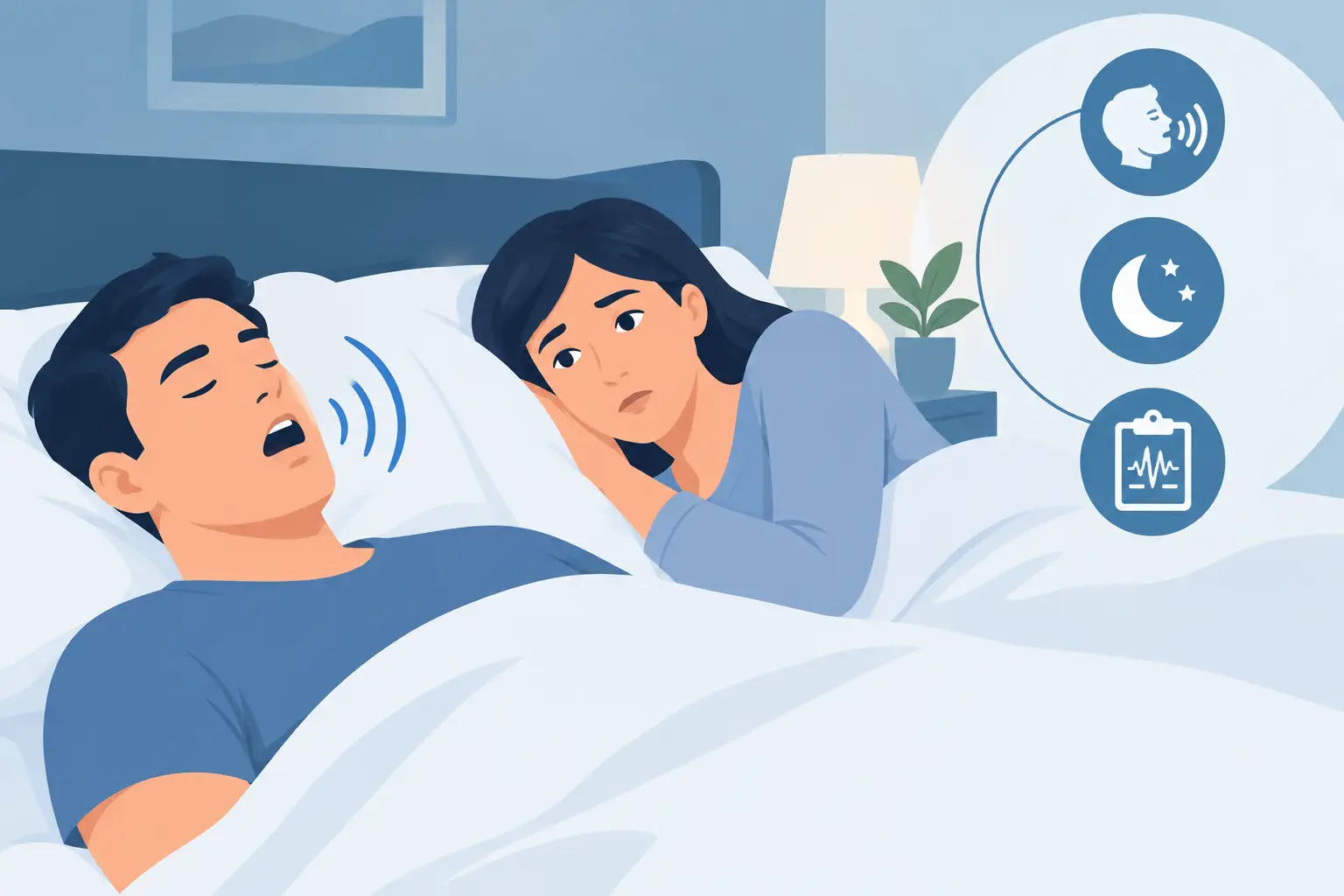
That distinction matters. Acupressure may support relaxation, but it should not be presented as a cure for chronic insomnia or a substitute for assessment where there may be sleep apnoea. If snoring comes with gasping, choking, pauses in breathing, morning headaches or overwhelming daytime tiredness, speak to your GP. Those signs need proper attention.
Guide to acupressure sleep points: where to press
You do not need to press hard. The right sensation is usually a mild tenderness, warmth or a comfortable sense of pressure – never sharp pain, numbness or bruising. Use the pad of your thumb or index finger, breathe slowly and keep your shoulders relaxed.
The inner wrist point
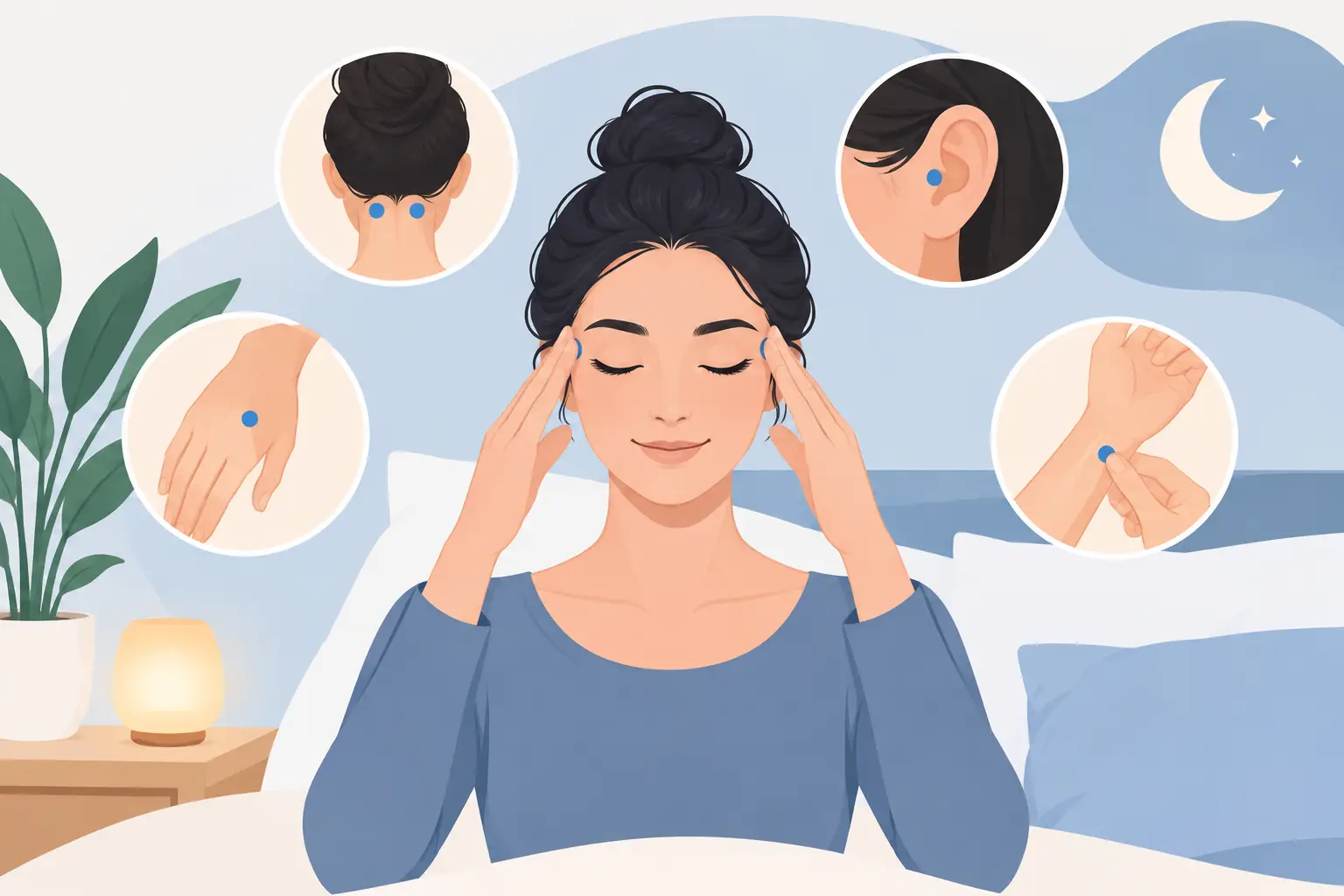
A commonly used calming point sits on the inner wrist, in the small hollow beneath the crease on the little-finger side. Turn your palm upwards and feel just below the wrist crease, between the tendons. Press gently with the thumb of your other hand.
Hold for around one minute, then make small circles for another 30 seconds. Repeat on the other wrist. This is an easy point to use while sitting in bed, especially if you are prone to replaying the day once the lights are out.
The point between the eyebrows
Place one finger in the space between your eyebrows, just above where the bridge of your nose begins. Use very light pressure here. Breathe in slowly through your nose, then make your exhale slightly longer than your inhale.
Try this for one to two minutes. It is particularly useful when screen time, work worries or a racing mind have left you feeling mentally switched on. The pressure is gentle; forcing it will not make it work better.
The point behind the ear
Feel behind your earlobe for the soft area where the jaw meets the skull. Applying light circular pressure here can feel soothing when you are carrying tension in your jaw, neck or temples.
Spend 30 to 60 seconds on each side. If you clench your teeth at night, combine this with consciously letting your tongue rest on the floor of your mouth and allowing your teeth to part slightly. It will not treat a dental issue, but it can reduce the feeling of going to bed wound tight.
The foot point below the big toe
On the sole of the foot, find the soft depression just below the ball of the foot, roughly in line with the space beneath the big toe. Support your foot in one hand and press with the thumb of the other.
This point is harder to reach once you are under the duvet, so it suits a pre-bed routine. Press for one minute per foot, using a slow circular motion. If your feet are sore, swollen or sensitive, reduce the pressure or skip it altogether.
The hand and little-finger area
The hands are convenient because they are always accessible. Gently massage the outer edge of the little finger and the fleshy area of the palm beneath it for a minute or two. For some people, a consistent point of pressure on the little finger is also used as part of a non-invasive approach to simple snoring.
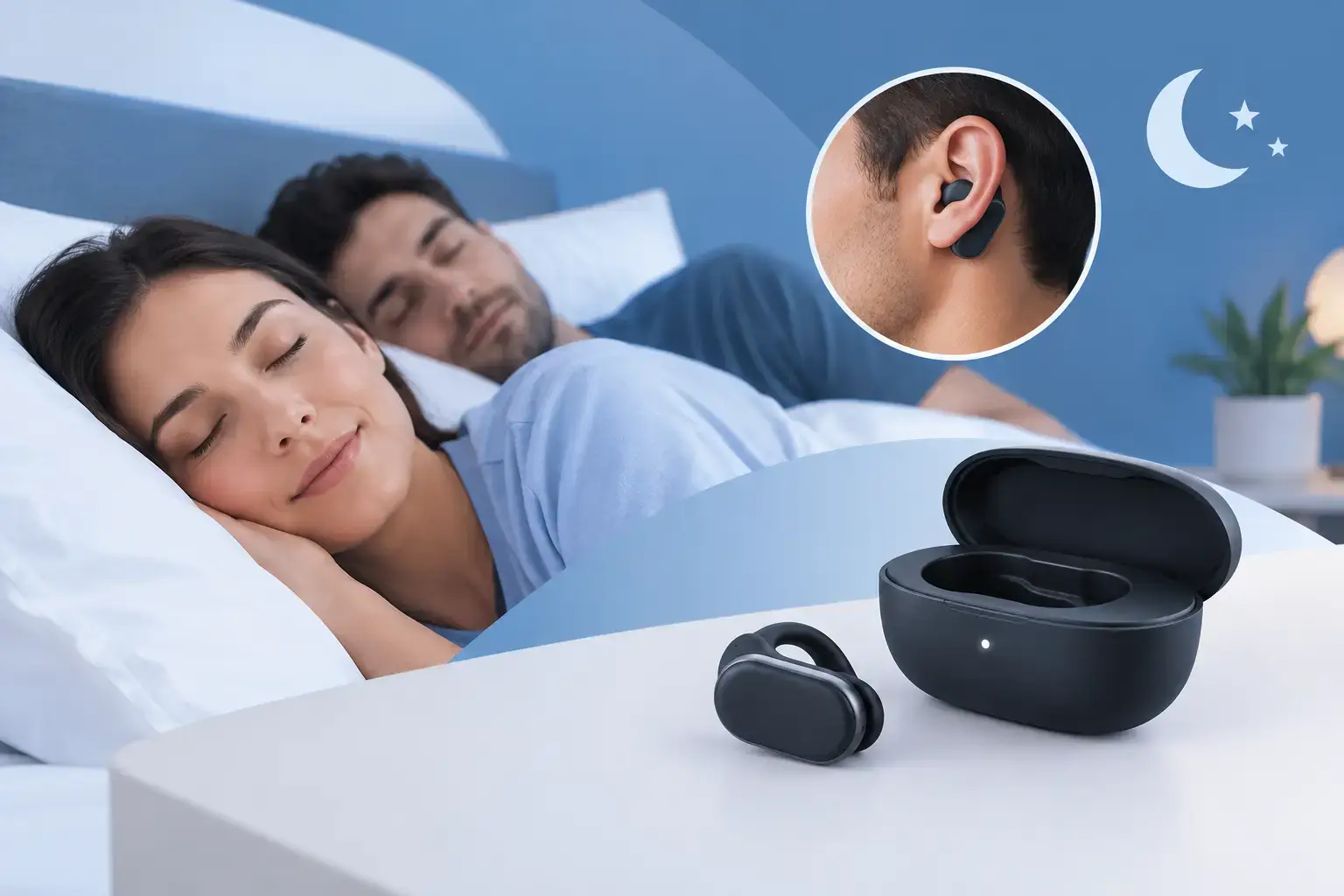
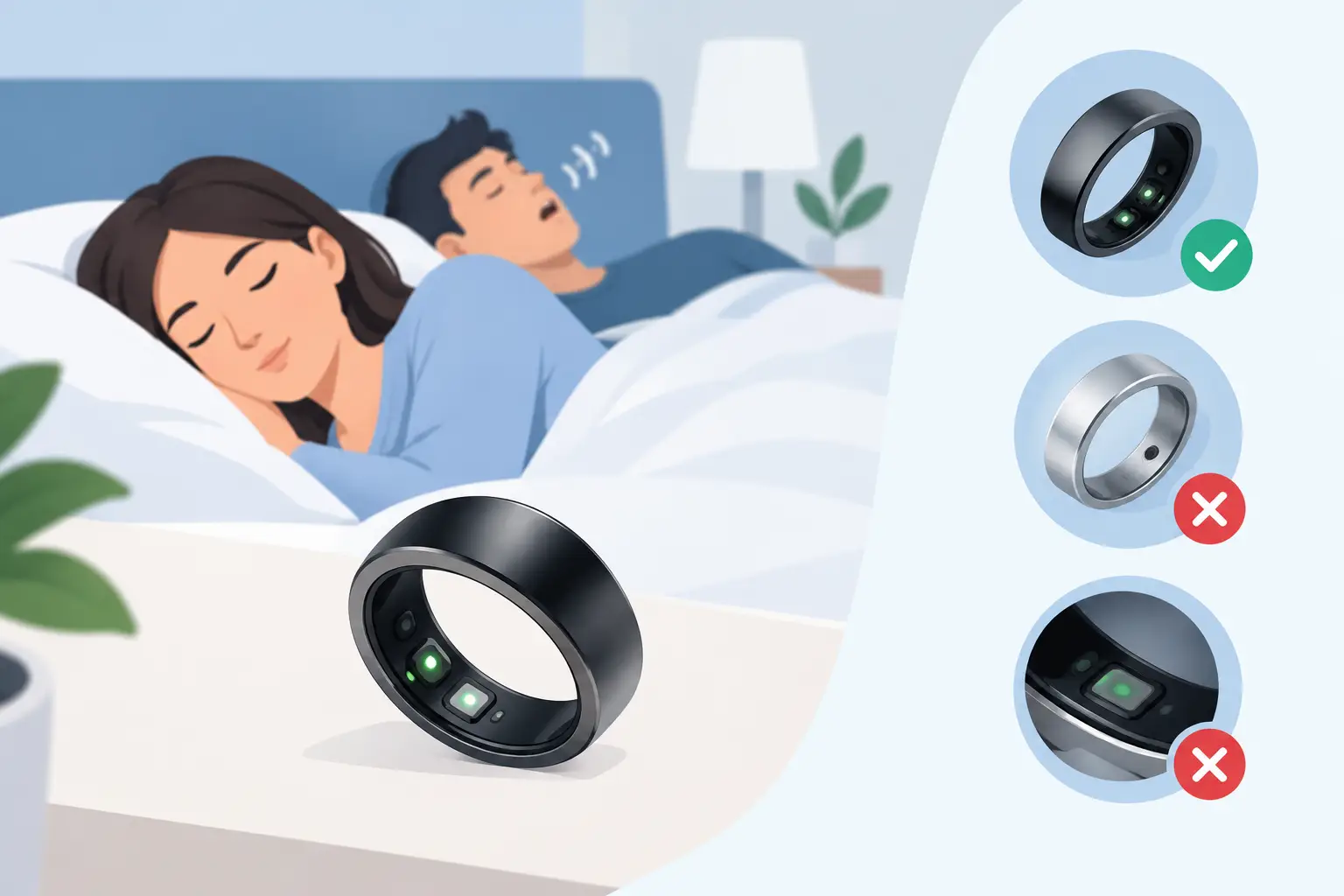
This is the principle behind the Good Night Anti-Snoring Ring, the original stop snoring ring. It is designed to apply pressure while you sleep, rather than asking you or your partner to remember a routine in the middle of the night. It is not for every kind of snoring, but it can be a more comfortable option than bulky mouthpieces for people looking for a discreet, medication-free approach.
How to use acupressure before bed
Acupressure works best as a short, repeatable habit rather than a one-off rescue attempt at 2 am. Set aside five minutes before you get into bed. Dim the lights, put your mobile phone down and choose two or three points that feel comfortable.
Start with the inner wrists, move to the point between the eyebrows, then finish with the hand or foot point. Hold each point steadily rather than poking or rubbing aggressively. Breathe at a pace that feels natural, preferably with a longer exhale. Your goal is not to perform the technique perfectly; it is to give your body a clear signal that the day is ending.
If you wake overnight, use the wrist or hand points rather than turning on a light and starting a full routine. Keep the pressure light and avoid checking the time. Clock-watching often creates more frustration than the wakefulness itself.
What makes the routine more likely to help
Acupressure has a better chance of feeling useful when it is paired with the basics of good sleep. Keep your bedroom cool and dark, avoid heavy meals and alcohol close to bedtime, and aim for a reasonably regular wake-up time. None of these changes needs to be perfect. Consistency is more valuable than chasing an ideal routine for three days and abandoning it.
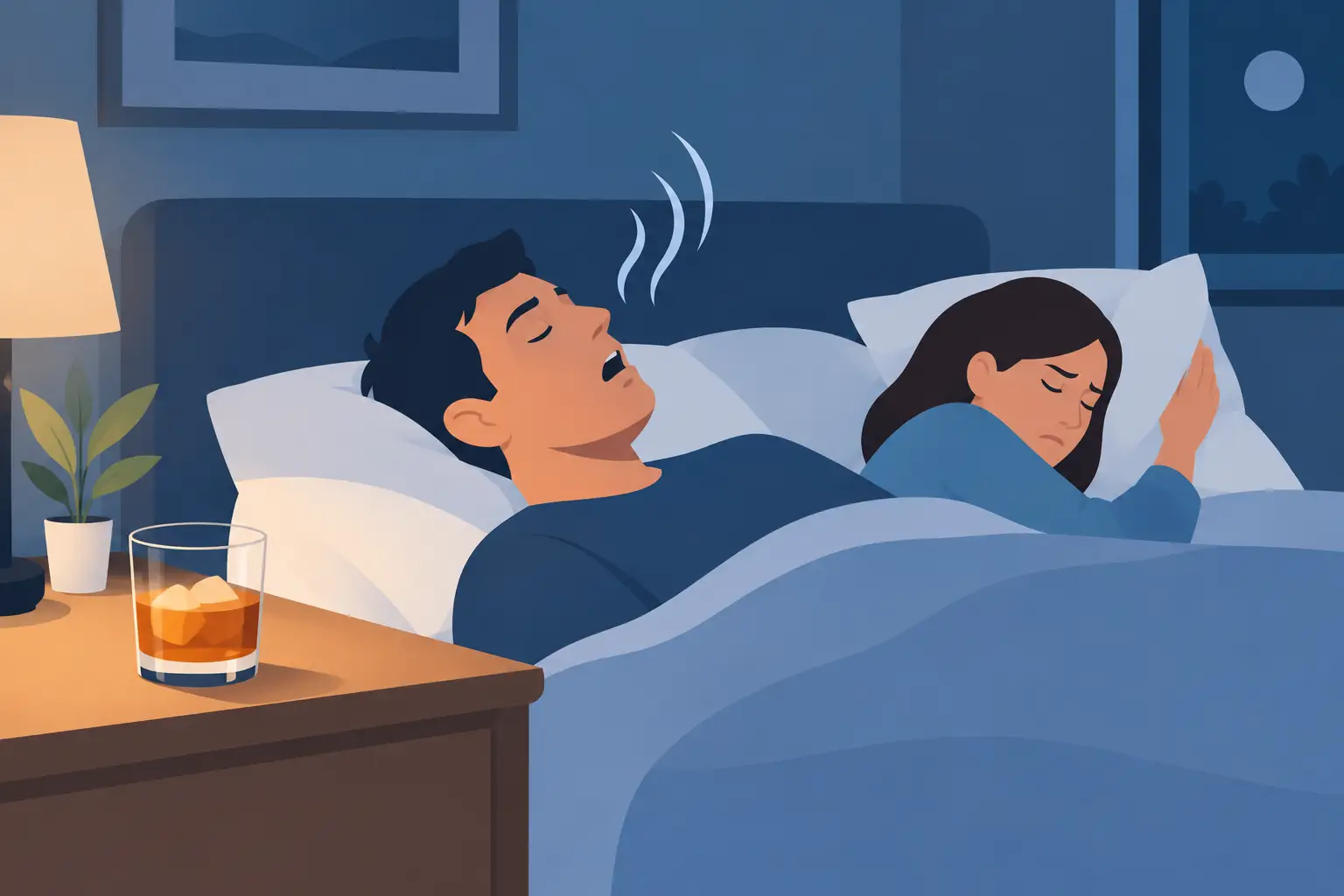
For couples, address snoring without turning bedtime into blame. Simple snoring can be affected by sleeping position, nasal blockage and alcohol, while loud, persistent snoring may need clinical assessment. A calm conversation in daylight is far more productive than nudging, arguing or moving to the sofa at 3 am.
It also helps to keep expectations sensible. You may feel calmer the first time you try acupressure, or you may need a week of repetition before deciding whether it belongs in your routine. If a point feels unpleasant, stop. Relaxation should not be another task to endure.
When to avoid acupressure or seek advice
Do not press directly on broken skin, bruises, rashes, swollen areas or recent injuries. If you are pregnant, have a circulation condition, take blood-thinning medication or are managing a health condition that affects sensation in your hands or feet, ask a healthcare professional before trying unfamiliar pressure points.
Most importantly, do not use acupressure to explain away serious sleep symptoms. Repeated breathing pauses, choking in sleep, chest pain, severe daytime sleepiness or a sudden change in snoring deserve medical advice. Better sleep starts with knowing when a simple at-home measure is enough and when it is not.
Tonight, choose one point that feels easy to reach, give it a quiet minute of steady pressure, and let that small pause become part of a kinder bedtime routine.