Blog
Single Post
7 Simple Snoring Solutions for Adults
If snoring has turned bedtime into a nightly negotiation, you are not alone. Many people looking for simple snoring solutions for adults are not chasing a complicated medical programme – they just want a practical way to sleep more quietly, wake up less irritated, and stop disturbing the person beside them.
That matters because simple snoring is often treated as a joke when, in real life, it wears people down. Partners lose sleep. Snorers feel blamed for something they do not fully control. And after a while, even small bedtime frustrations can start to affect mood, energy, and relationships. The good news is that not every case of snoring needs an intrusive or uncomfortable fix.
What causes simple snoring in adults?
Simple snoring usually happens when airflow is partially restricted during sleep, causing soft tissues in the throat or nose to vibrate. That restriction can be made worse by sleeping on your back, nasal congestion, alcohol before bed, excess weight, or simply the way your airway is shaped.
There is an important distinction here. Not all snoring is the same. Some adults snore occasionally and mildly. Others snore most nights and very loudly. And in some cases, snoring can be linked to obstructive sleep apnoea, which is a medical issue rather than a simple nuisance. If snoring comes with choking, gasping, long breathing pauses, severe daytime tiredness, or morning headaches, it is sensible to speak to a healthcare professional.
For adults dealing with straightforward snoring rather than a more serious sleep disorder, simpler options often make sense as a first step.
Why simple snoring solutions for adults are often the best place to start
People tend to assume that a snoring problem requires something dramatic – a bulky mouthguard, medication, or a machine by the bed. Sometimes those treatments are necessary, but often they are not the first or best fit for someone who wants a comfortable, low-fuss routine.
The most effective solution is usually the one you will actually use every night. That is where simplicity matters. If a remedy feels awkward, painful, noisy, or embarrassing, many people give up quickly. A less invasive option may not sound exciting, but it is often far more realistic for long-term use.
1. Change your sleep position
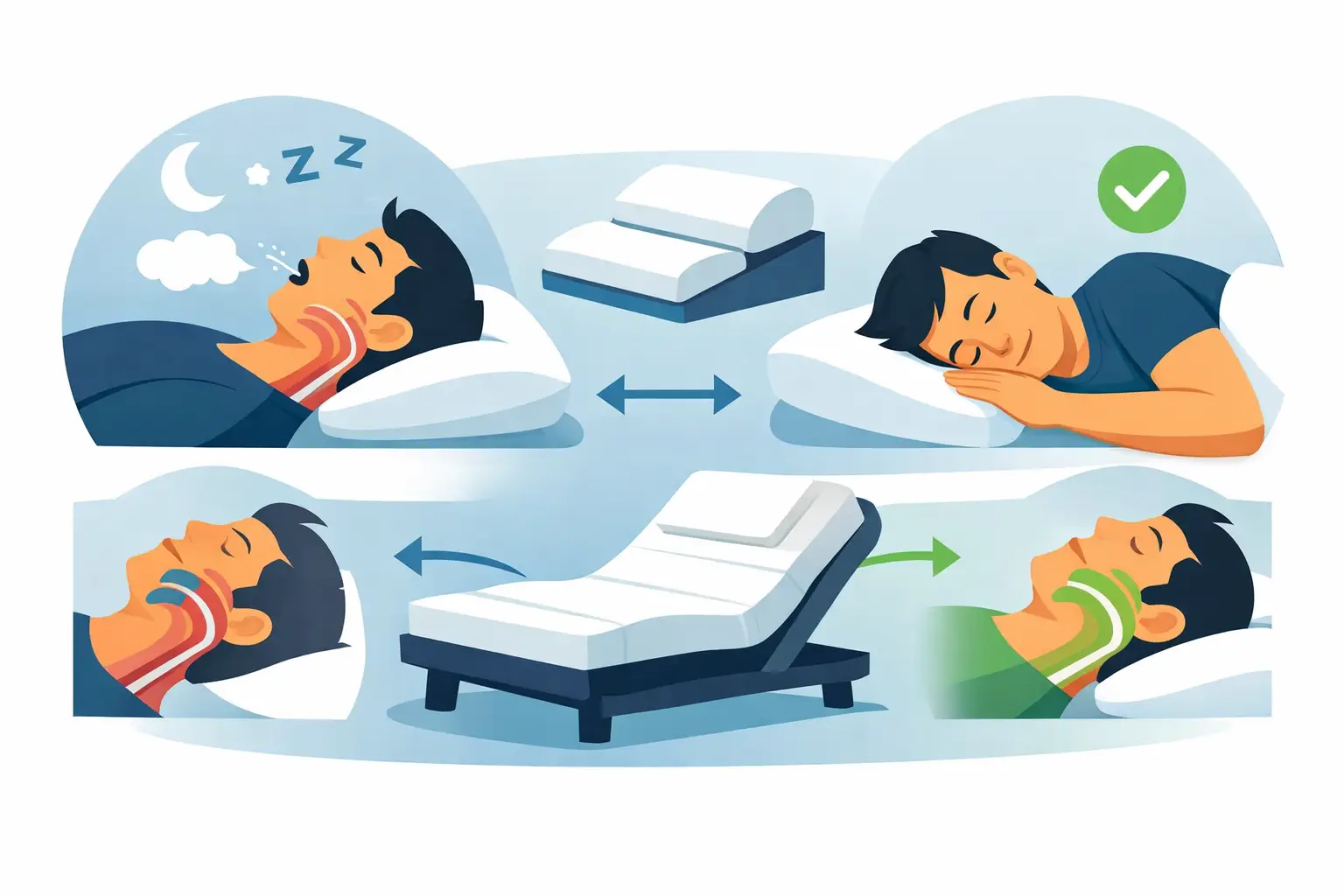
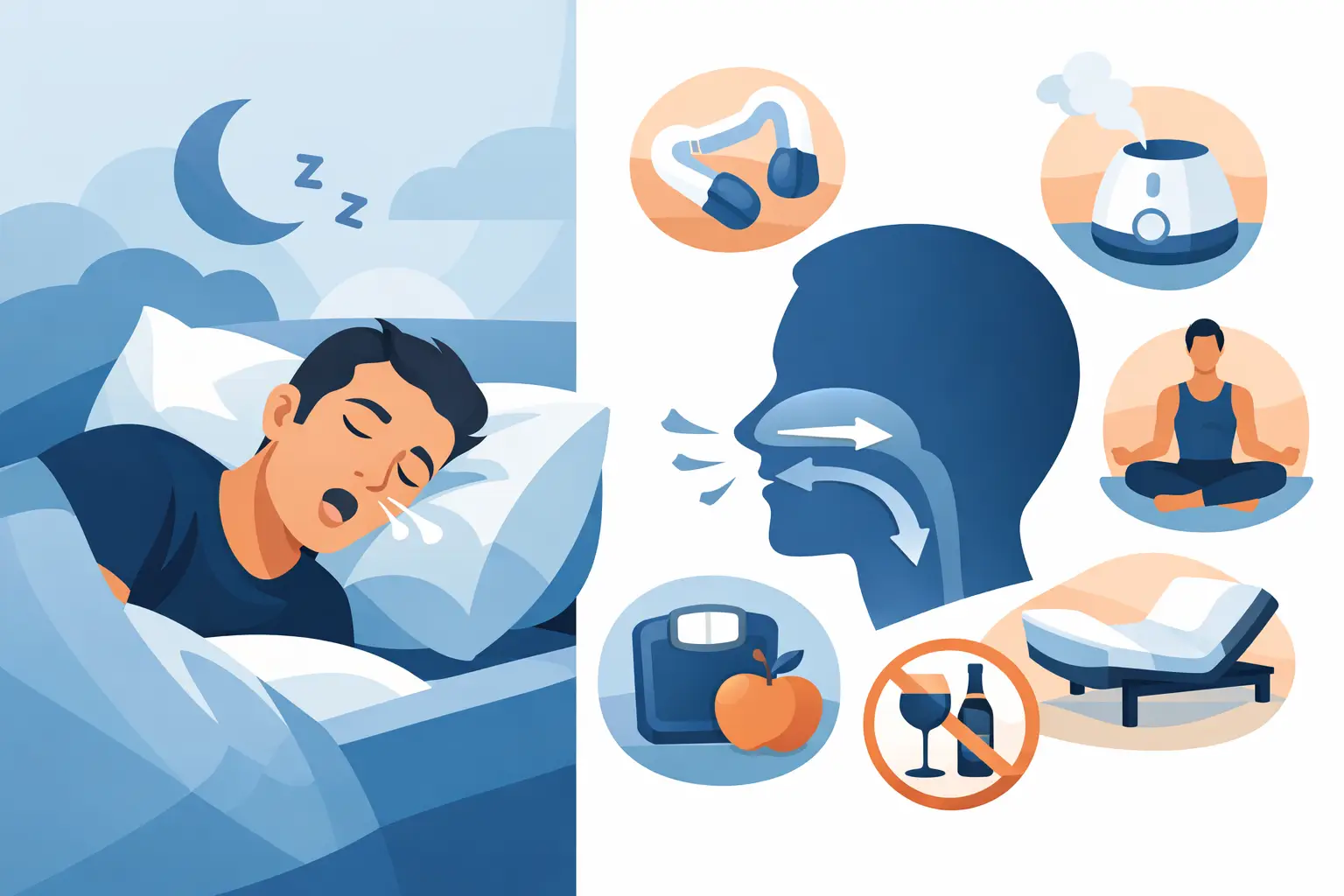
Back sleeping can make snoring worse because it encourages the tongue and soft tissues to fall backwards, narrowing the airway. For many adults, moving onto the side reduces the vibration that causes snoring.
This is one of the easiest changes to test because it costs very little and can have a noticeable effect. That said, it depends on the individual. Some people naturally roll back during the night, so a position change may help for an hour or two but not last until morning. It is useful, but not always enough on its own.
2. Cut back on alcohol before bed
Alcohol relaxes the muscles of the throat, which can increase snoring. Even people who do not usually snore much may notice a difference after evening drinks.
This does not mean every adult needs to give up alcohol entirely. It simply means timing matters. Leaving a bigger gap between drinking and sleep can help reduce the problem. If your snoring is noticeably worse after a few drinks, this is one of the clearest patterns to address.
3. Deal with nasal blockage
When the nose feels blocked, people are more likely to breathe through the mouth during sleep, which can worsen snoring. Allergies, colds, dry air, and dust can all play a part.
Simple steps such as keeping the bedroom clean, managing allergens, or using steam before bed may help. For some adults, nasal congestion is the main trigger. For others, clearing the nose improves things slightly but does not solve the core issue. It is worth trying, especially if snoring gets worse during hay fever season or when you are run down.
4. Pay attention to weight changes
For some adults, carrying extra weight around the neck and throat can narrow the airway and make snoring more likely. If snoring has increased alongside weight gain, that link is worth considering.
Still, this is not a quick fix, and it is not the full story. Slim people snore too. Telling someone to just lose weight is rarely useful when they need sleep relief now. Weight management may improve snoring over time, but many people also want a solution they can use tonight.
5. Keep a steadier bedtime routine
Poor sleep habits can make snoring worse. Overtiredness can lead to deeper, heavier sleep and more relaxed airway muscles, which can increase noise during the night.
A regular bedtime, a calmer wind-down, and enough sleep overall can make a difference. This is not the most dramatic solution, but it supports better sleep quality more broadly. If your routine is all over the place, improving it may reduce snoring and help you feel better the next day.
6. Be careful with bulky anti-snoring devices
Many adults try mouthpieces or similar devices because they promise fast results. Some do help, but there is a trade-off. Mouthguards can feel intrusive, cause jaw discomfort, increase drooling, or simply be too unpleasant to wear consistently.
That is why non-invasive options appeal to so many couples. A remedy is only useful if it fits into real life. If you have already abandoned one or two night-time devices because they were uncomfortable, that does not mean you are out of options. It usually means you need something simpler.
7. Consider a non-invasive wearable designed for simple snoring
This is where many adults find the balance they have been looking for. A non-invasive wearable, especially one designed to be discreet and easy to use, can offer a more elegant alternative to mouthpieces and drug-based solutions.
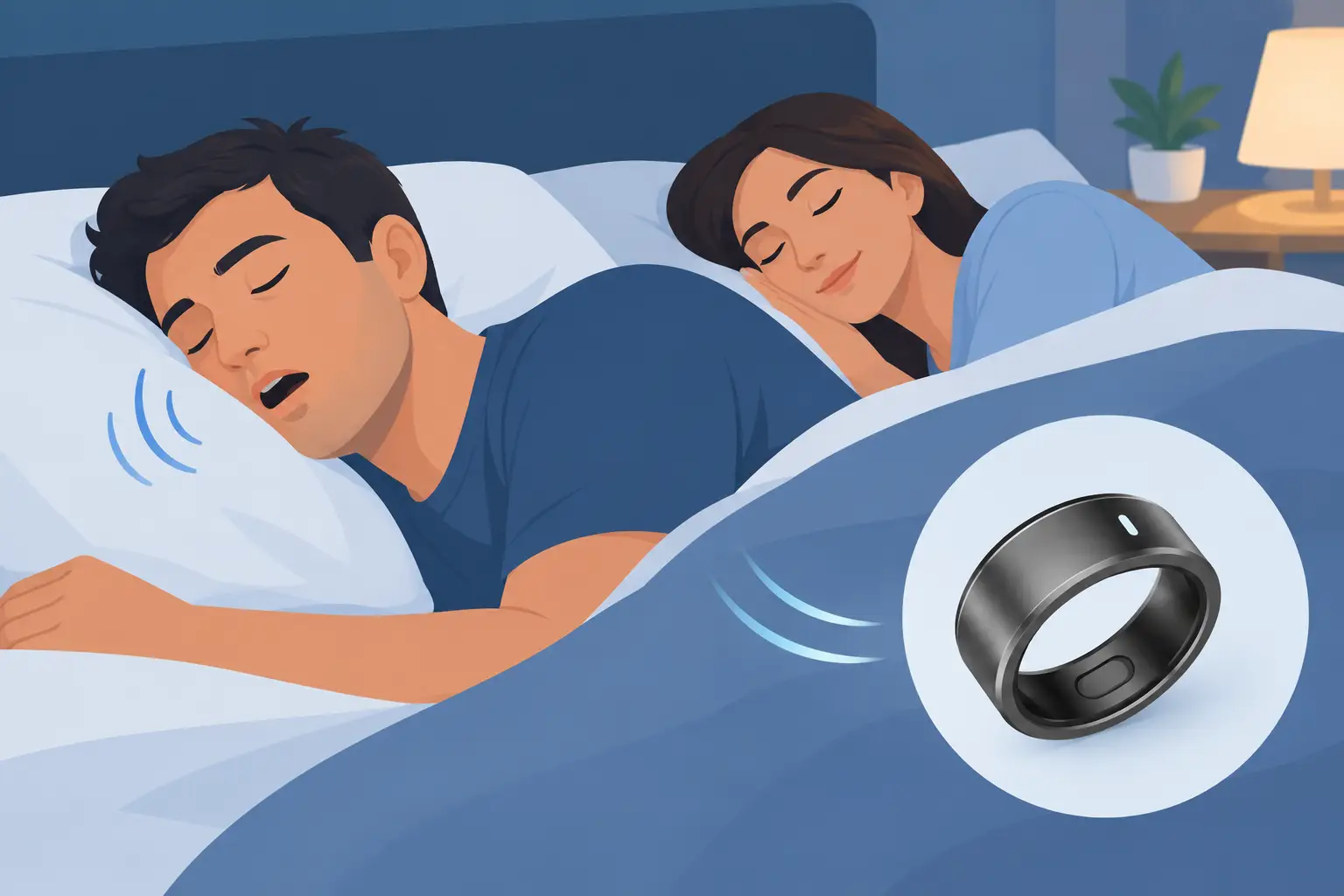
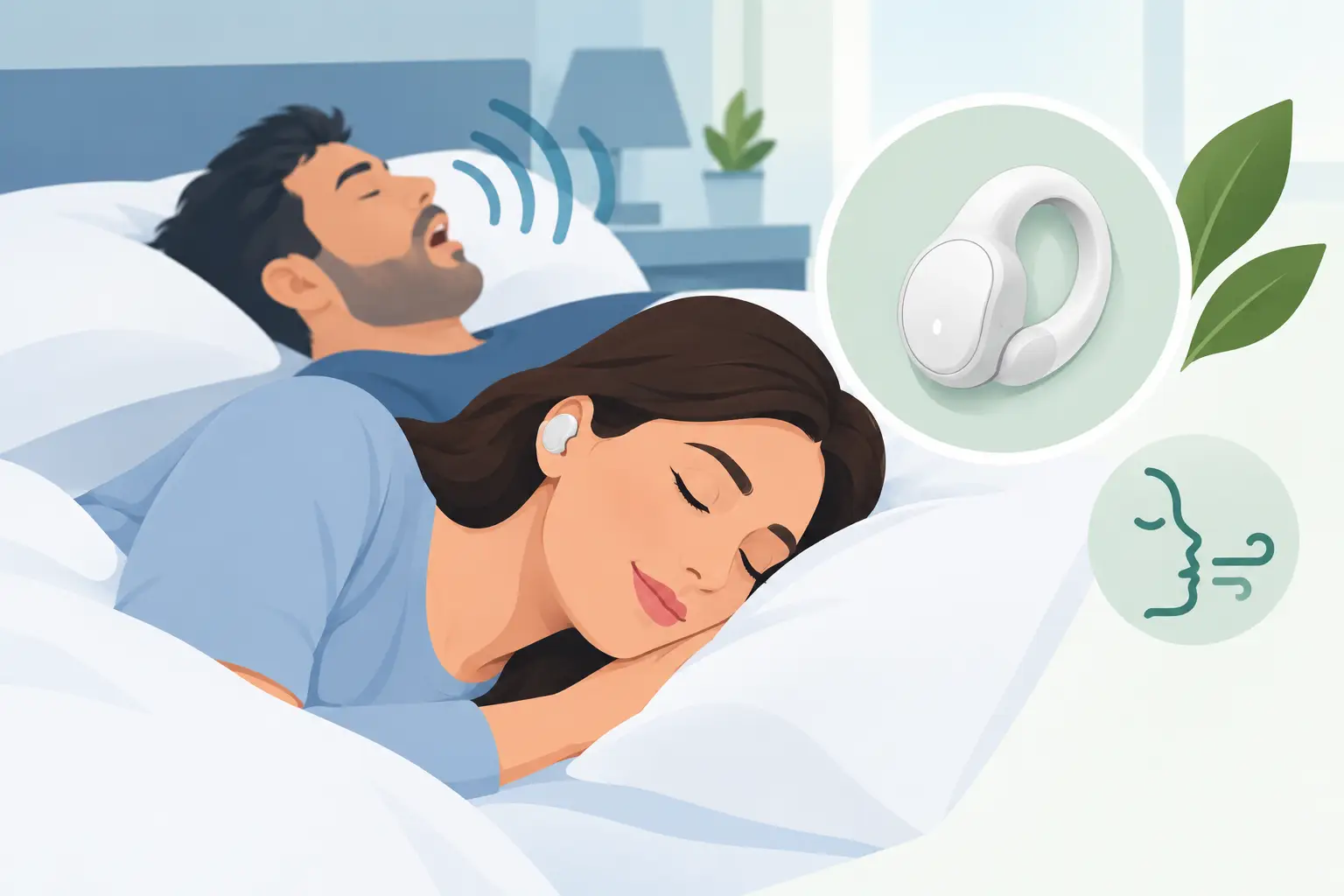
The Good Night Anti-Snoring Ring is built around that idea. Marketed as the original stop snoring ring, it uses acupressure on specific points of the little finger during sleep as a natural approach to reducing simple snoring. For adults who want to avoid bulkier devices, that kind of design makes obvious sense. There is no mask, no tablet, and no complicated set-up before bed.
Just as importantly, the product is presented with the kind of proof cautious buyers look for. It is clinically trialled, FDA-cleared in the US, and backed by a 30-day money-back guarantee. That does not mean it works for absolutely everyone, and honest brands should say so. Snoring has different causes, and no single solution is universal. But for adults who want a practical, low-risk option, a clinically supported wearable is a sensible place to look.
How to choose the right simple snoring solution for adults
The best choice depends on what is causing the snoring and what you are willing to use consistently. If snoring is occasional and linked to alcohol or congestion, a routine change may be enough. If it happens most nights and your partner is at the end of their patience, you may want something more reliable than trial and error.
Comfort should be taken seriously. So should discretion. Many adults are happy to try a solution once, but not if it makes sleep feel clinical or awkward. A simple wearable has an advantage here because it is easy to build into a normal bedtime routine.
It is also wise to look at legitimacy. The anti-snoring market is full of cheap copycats and exaggerated claims. If a product seems vague about testing, guarantees, or what it is actually designed to do, caution is justified. Clear claims, clinical support, and refund protection matter because they reduce the risk of wasting money on something that looks clever but delivers very little.
When a simple solution is enough – and when it is not
A lot of adult snoring can be improved with straightforward changes or a non-invasive device. That is the good news. The harder truth is that persistent, severe snoring sometimes needs a proper medical assessment.
If your partner notices breathing pauses, gasping, or repeated choking sounds, do not brush it off as ordinary snoring. The same applies if you are extremely sleepy in the daytime, struggle to concentrate, or wake with headaches. Simple solutions are useful for simple snoring. They should not be used to ignore warning signs.
For everyone else, the aim is not perfection on the first night. It is finding a solution that feels realistic, comfortable, and worth sticking with. The quieter bedroom usually comes from that combination, not from the most dramatic promise on the box.
A better night often starts with choosing the option you will genuinely use – and that is usually the simplest one.