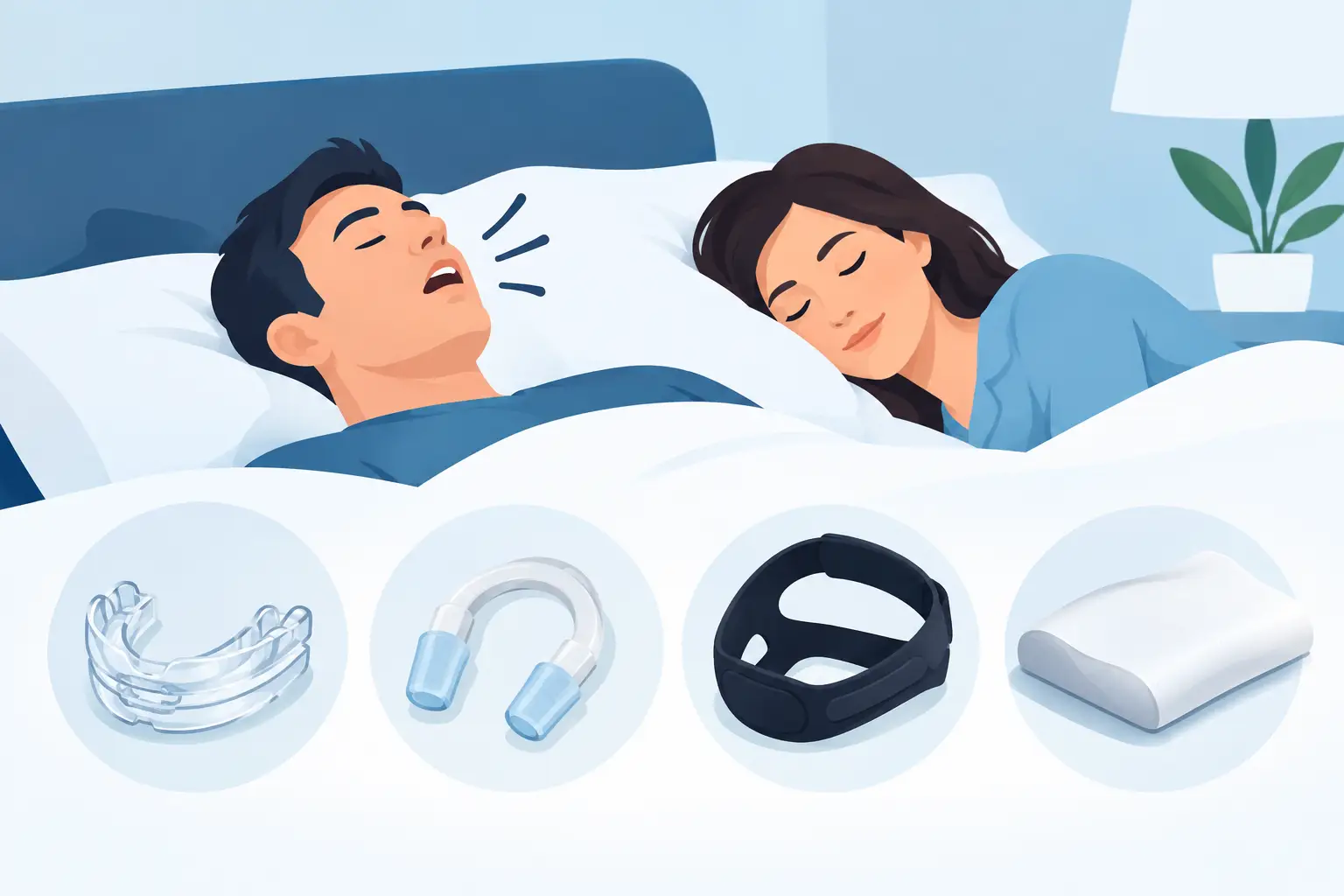
Your partner has nudged you awake again. You are tired of waking with a dry mouth, and the usual advice to buy another bulky gadget is wearing thin. When comparing an acupressure ring versus nasal dilator, the useful question is not which is universally best. It is which one addresses the reason you snore, without making bedtime harder.
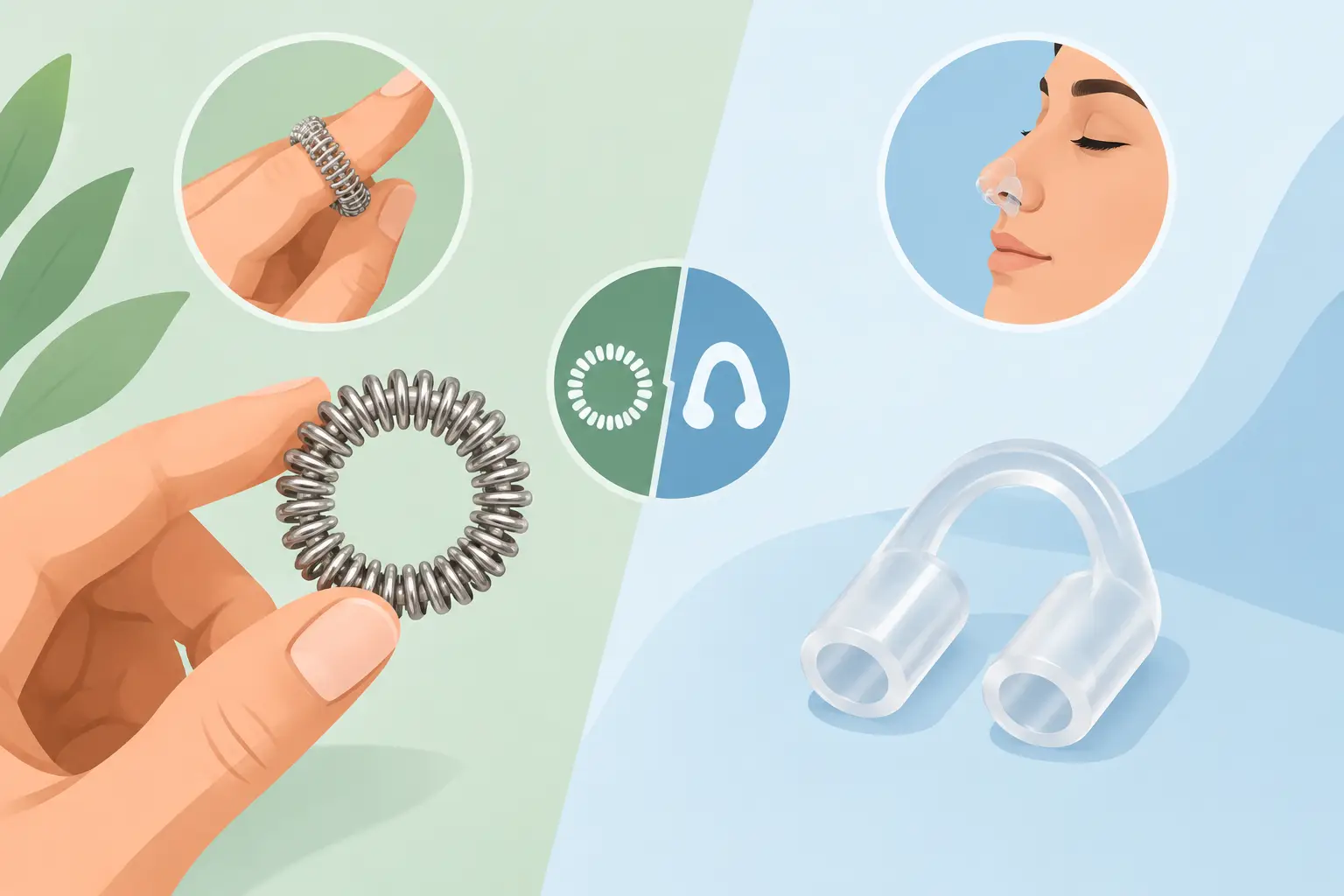
Both options are drug-free and relatively simple. But they work in entirely different ways. A nasal dilator focuses on airflow through the nose. An acupressure ring is worn on the little finger and is designed to apply gentle pressure to specific points associated with simple snoring. Understanding that distinction can save you money, frustration and a few more disrupted nights.
Acupressure ring versus nasal dilator: the key difference
A nasal dilator is a physical aid for the nostrils. Some sit just inside the nose, while external versions use adhesive strips across the bridge of the nose. Their purpose is straightforward: they help keep the nasal passages more open, which may reduce resistance to airflow.
An acupressure ring does not open the nose or hold the jaw in a certain position. It is a small wearable placed on the little finger before sleep. It applies pressure to particular acupressure points, offering a non-invasive approach for people with simple snoring. For many people, that discreetness is the appeal: no adhesive, no device in the nostrils and no mouthguard.
The right choice depends on the pattern behind your snoring. Nasal congestion and narrow nasal passages point towards a nasal option. Snoring that continues even when your nose feels clear may call for a different approach.
When a nasal dilator may make sense
A nasal dilator can be worth trying when your snoring clearly gets worse with a blocked nose. Seasonal allergies, a cold, dry indoor air or a naturally narrow nasal valve can all make nasal breathing feel restricted at night.
You may be a good candidate if you notice that you breathe more freely through your nose after using a strip or internal dilator, or if your partner says the snoring is most noticeable during hay fever season. External strips are visible but simple to apply. Internal dilators are less obvious, although some people find the sensation uncomfortable or struggle to keep them in place overnight.
There are limits. A nasal dilator cannot resolve every form of snoring because not all snoring starts in the nose. If soft tissues farther back in the throat vibrate, widening the nostrils may make little difference. It can also be impractical when you have sore skin, a cold that requires frequent nose blowing, or a strong dislike of anything placed on or inside the nose.
When an acupressure ring may be the better fit
An acupressure ring can suit adults looking for a natural, low-fuss option for simple snoring, particularly if nasal blockage does not appear to be the main issue. There is no medication, no charging, no adhesive and no need to alter how you sleep.
The Good Night Anti-Snoring Ring is the original stop snoring ring and is clinically trialled as a non-invasive option for simple snoring. It is designed to be worn nightly on the little finger, making it easy to build into a bedtime routine. For couples, that matters. A solution only helps if it is comfortable enough to use consistently.
That said, honest guidance matters more than bold promises. Acupressure will not work for everyone, and a ring should not be presented as a treatment for sleep apnoea or other underlying medical conditions. A product with a proper trial period and a full refund guarantee gives you room to assess your own results without feeling trapped by another disappointing purchase.
Comfort, convenience and real-life use
Comfort is not a minor detail in anti-snoring products. It is often the difference between something you test for two nights and something you genuinely use.
Nasal dilators can work quickly for nasal restriction, but they require a nightly supply of strips or regular cleaning and replacement for internal versions. Some users dislike the pulling sensation of adhesive strips. Others find that internal dilators shift, cause dryness or simply feel too noticeable to sleep well.
An acupressure ring is compact and travel-friendly. Once fitted correctly, it has no consumable parts and no effect on your appearance in the morning. It may be particularly attractive if you have already rejected mouthpieces because they felt intrusive, caused jaw discomfort or made conversation before bed unnecessarily awkward.
However, a ring also needs to fit properly. It should feel secure but not painfully tight, and you should follow the product instructions for placement and wear. If you experience persistent discomfort, numbness or skin irritation, stop using it and seek advice.
How to work out what is driving your snoring
Before buying yet another remedy, spend a few nights noticing the clues. Does snoring happen only when you are congested? Is it worse after alcohol, a late heavy meal or sleeping on your back? Have you gained weight recently? Does your partner hear a steady rumble, or loud snorts followed by pauses in breathing?
Simple snoring is common and can be affected by sleep position, nasal airflow, fatigue and lifestyle factors. A nasal dilator may be a sensible first test if congestion is clearly involved. If it is not, a clinically trialled acupressure ring offers a less cumbersome alternative to devices that push, pull or hold parts of the face and mouth in place.
Keeping a brief note can help. Record the remedy used, whether you felt comfortable wearing it, your sleep quality and your partner’s observations. Give a solution enough consistent use to judge it fairly, rather than deciding after one unusually bad night.
Do not mistake snoring for a minor problem when it is not
Most snoring is simply noisy, frustrating and hard on relationships. But some symptoms need medical attention rather than another over-the-counter solution. Speak to a GP if you have witnessed pauses in breathing, gasping or choking during sleep, severe daytime sleepiness, morning headaches, difficulty concentrating, or high blood pressure alongside loud snoring.
These can be signs of obstructive sleep apnoea, which needs proper assessment. Neither a nasal dilator nor an acupressure ring should delay that conversation. The aim is better sleep, not masking a problem that deserves clinical care.
The practical choice for you and your partner
Choose a nasal dilator if blocked or restricted nasal breathing is the obvious trigger and you are comfortable using a nose-based device. Choose an acupressure ring if you want a discreet, natural option for simple snoring that does not occupy your nose or mouth.
You may even find that the answer changes with the season. A nasal dilator could be helpful during a heavy bout of hay fever, while an acupressure ring may better suit your normal nightly routine. What matters is choosing a solution you can tolerate, use correctly and assess honestly.
A quieter night is rarely about finding the most complicated device. It is about finding the approach that fits your snoring, your comfort and the person trying to sleep beside you.