Blog
Single Post
Your Guide to Non-Invasive Snoring Solutions
Snoring can turn a shared bedroom into a nightly negotiation. One person lies awake listening for the next rattle; the other wakes feeling blamed for something they cannot control. This guide to non-invasive snoring focuses on practical, drug-free options that can help with simple snoring without turning bedtime into a medical procedure.
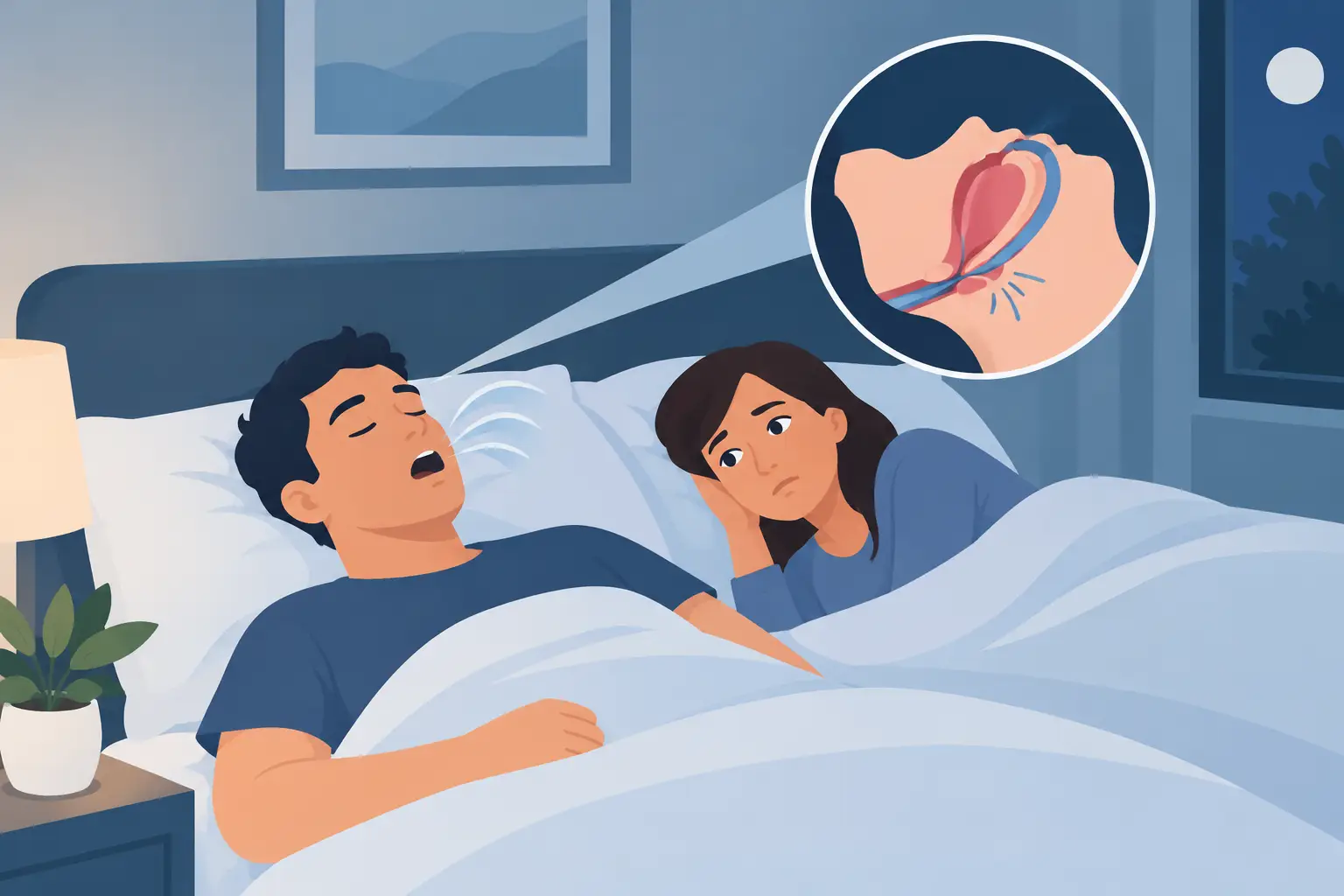
The right solution depends on what is causing the noise. Snoring happens when airflow makes relaxed tissues in the nose, mouth or throat vibrate during sleep. For some people, a few changes make a meaningful difference. For others, persistent loud snoring is a sign that they need proper medical assessment first.
Start by separating simple snoring from a medical concern
Simple snoring is common, particularly after alcohol, during a cold, when sleeping on your back or when you are overtired. It can be disruptive, but it does not always mean there is an underlying sleep disorder.
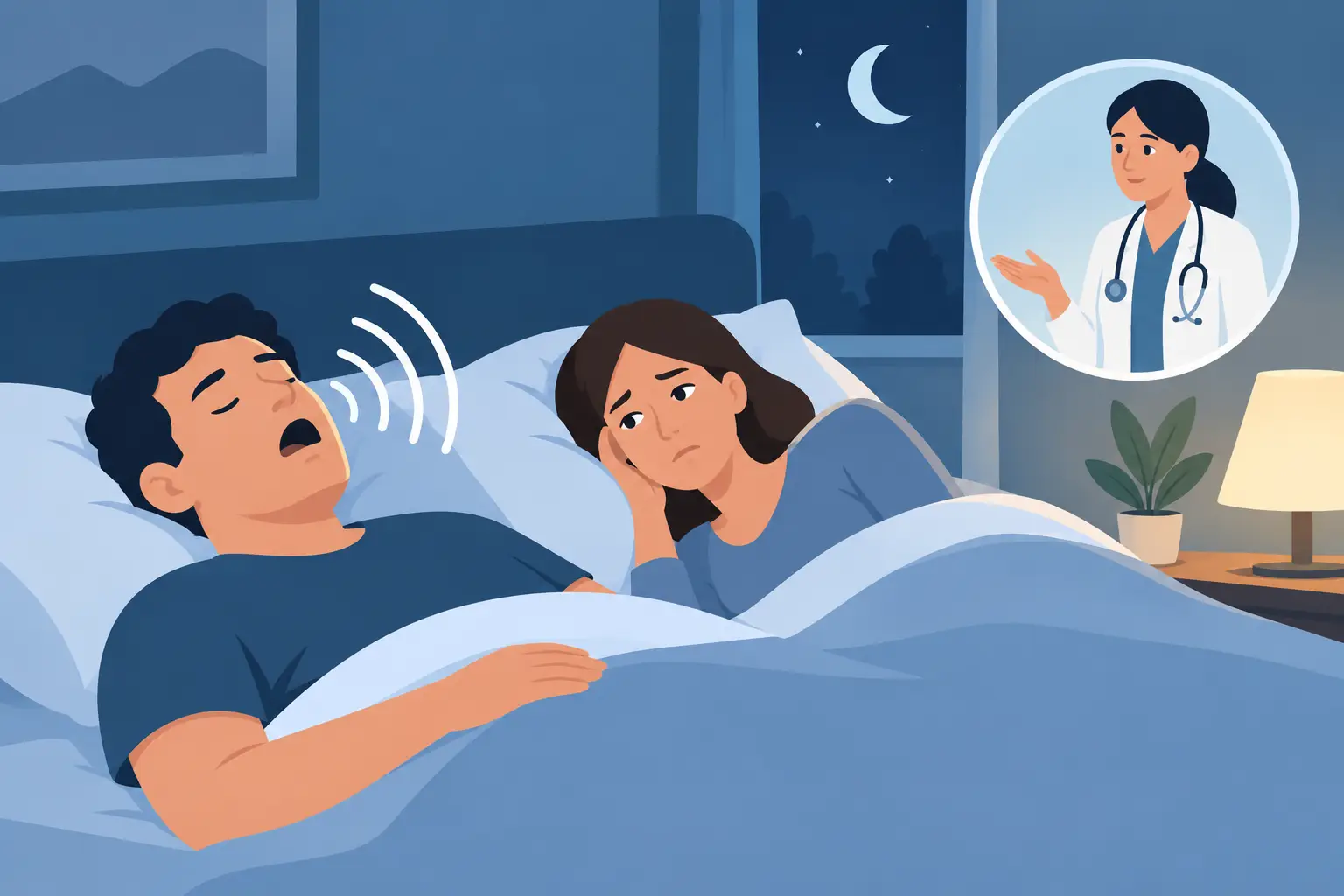
However, snoring should not be brushed aside if it comes with repeated pauses in breathing, choking or gasping, severe daytime sleepiness, morning headaches, poor concentration, or high blood pressure. These can be signs of obstructive sleep apnoea. A partner often notices the breathing pauses before the snorer does, so their observations matter.
If any of these signs apply, speak to your GP rather than relying on an anti-snoring product alone. Non-invasive measures can still support better sleep, but they are not a substitute for diagnosis or prescribed treatment where sleep apnoea is suspected.
Look at the triggers you can change tonight
A useful approach to non-invasive snoring is to begin with the low-effort factors that affect airflow. They are not glamorous, but they can be surprisingly effective when a clear trigger is involved.
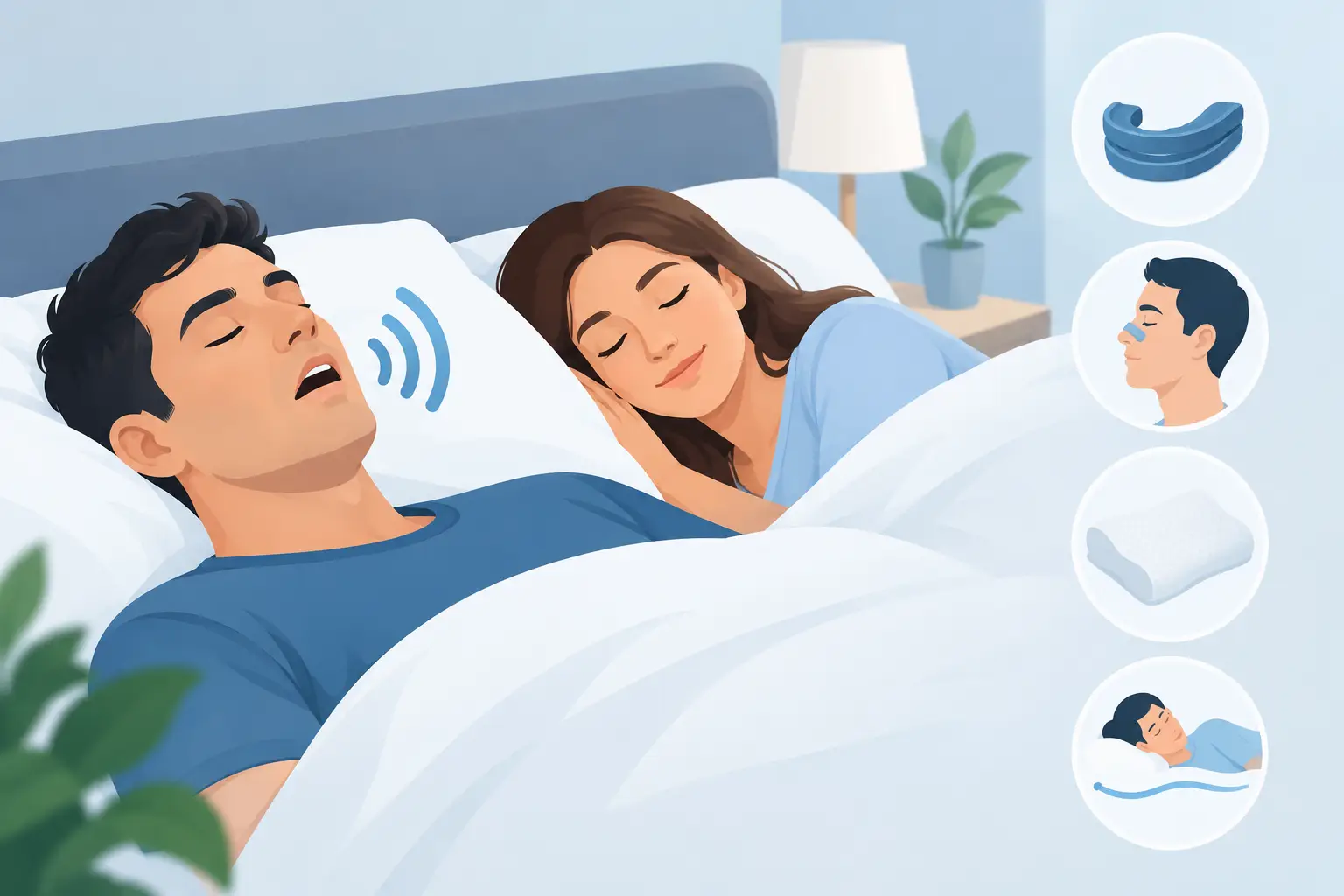
Sleeping position is one of the biggest. Back sleeping allows the tongue and soft tissues to fall backwards more easily, narrowing the airway. Side sleeping may reduce this for many people. A supportive pillow, a body pillow, or a gentle reminder sewn into the back of sleepwear can make side sleeping easier to maintain through the night.
Alcohol relaxes throat muscles, which can make snoring louder and more frequent. Try avoiding it for several hours before bed, particularly if your snoring is noticeably worse after an evening drink. Sedating medicines can have a similar effect, so do not change prescribed medication without discussing it with a pharmacist or clinician.
Nasal congestion also matters. Seasonal allergies, a cold, dry air and irritants can all make it harder to breathe freely through the nose. Keeping the bedroom clean, managing known allergies and using an appropriate saline nasal rinse may help some people. If blockage is frequent or one-sided, it is worth asking a GP to investigate the cause.
Support your airway with sustainable habits
Weight is only one part of the picture, and slim people snore too. But where excess weight is contributing to airway narrowing, gradual weight loss can reduce snoring over time. The aim is not a crash diet or a promise of instant results. It is a manageable routine that supports your overall health as well as your sleep.
Regular movement, consistent sleep times and enough sleep can also help. Being severely overtired changes how deeply you sleep and may worsen snoring for some people. A predictable wind-down routine may feel basic, but it gives your body a better chance of settling into restorative sleep.
Smoking can irritate and inflame the upper airway, so reducing or stopping can be beneficial. This is not a quick overnight fix, but it is a worthwhile change for snoring, breathing and long-term health.
Choose a non-invasive option you can actually live with
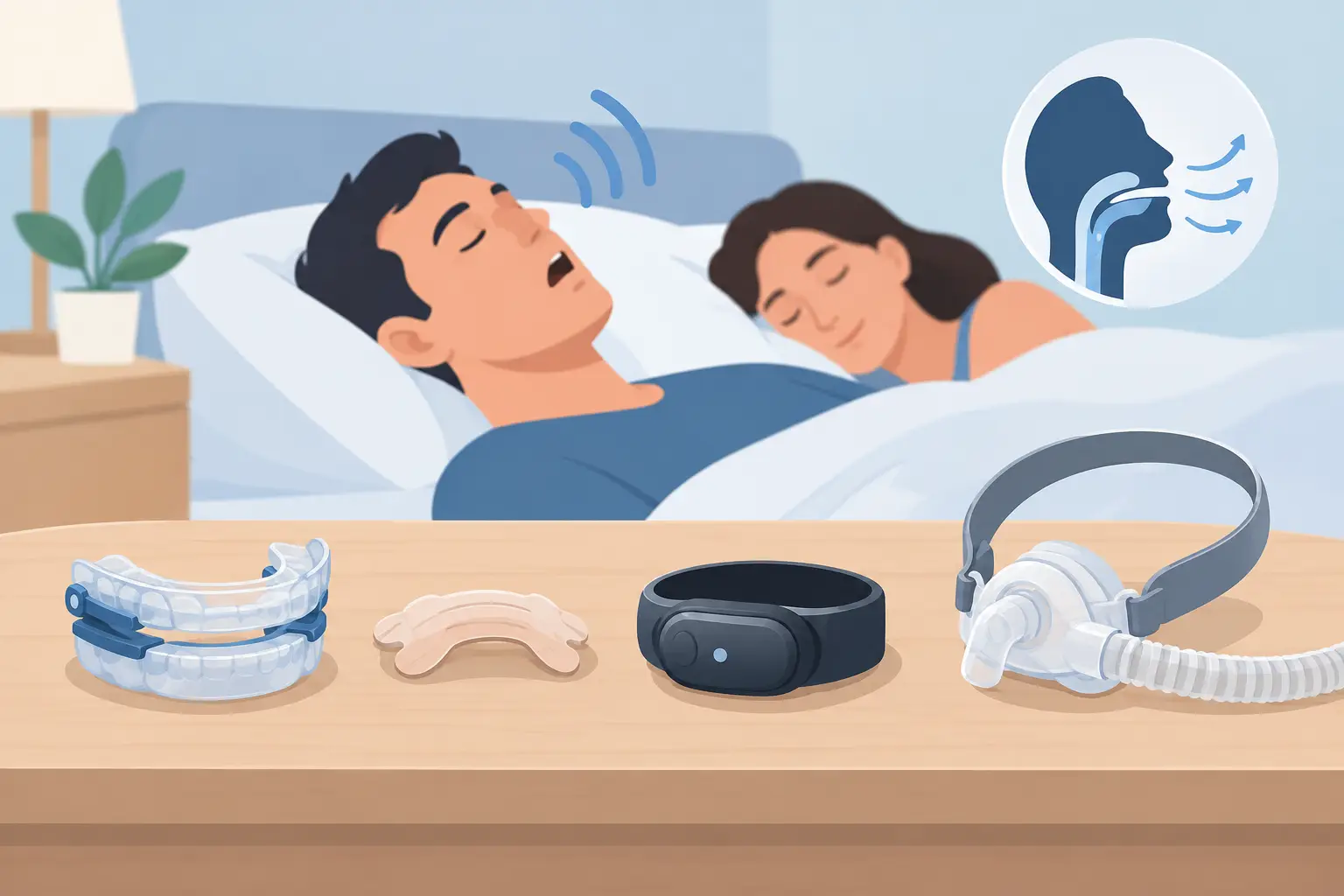
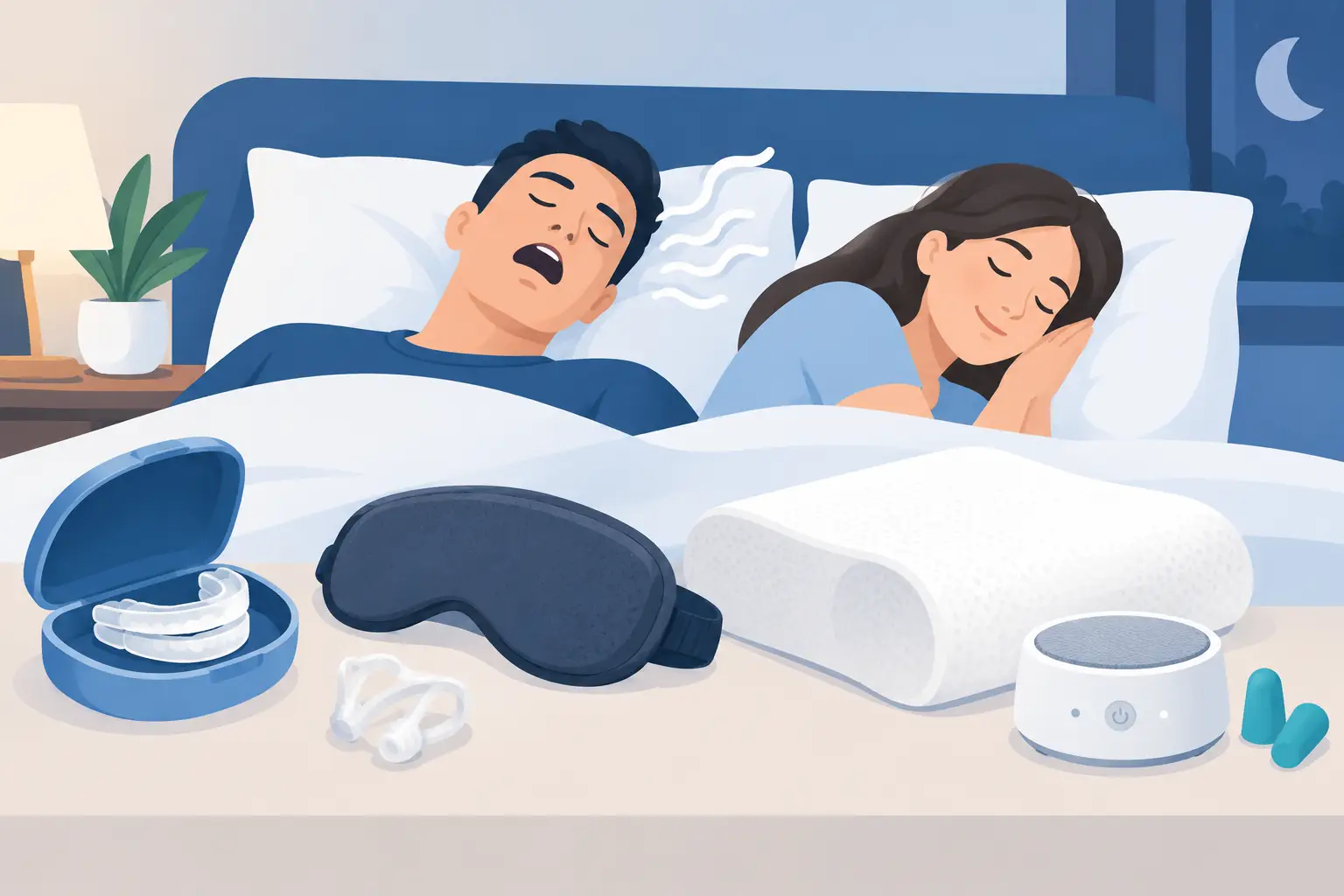
Many people give up on snoring remedies because the solution is harder to tolerate than the snoring itself. Bulky mouthpieces can feel intrusive. Adhesive strips and sprays may suit some people but do little for others. Devices that force the jaw into a new position are not right for everyone, especially people with dental concerns, jaw pain or sensitive gums.
That is why comfort and consistency should be part of the decision. A product can only help if you are willing to use it night after night.
Nasal strips may be worth trying when the issue is mainly nasal restriction. They work by gently widening the nostrils from the outside. They will not address every type of snoring, particularly noise coming from deeper in the throat, but they are simple and non-medicated.
A specially fitted mandibular advancement device may be considered where a dentist or sleep clinician believes it is appropriate. These mouthpieces can be effective for some people, but they are more intrusive than other options and may cause jaw discomfort, tooth movement or excess saliva. A poorly fitted generic mouthguard is not the same as a professionally assessed device.
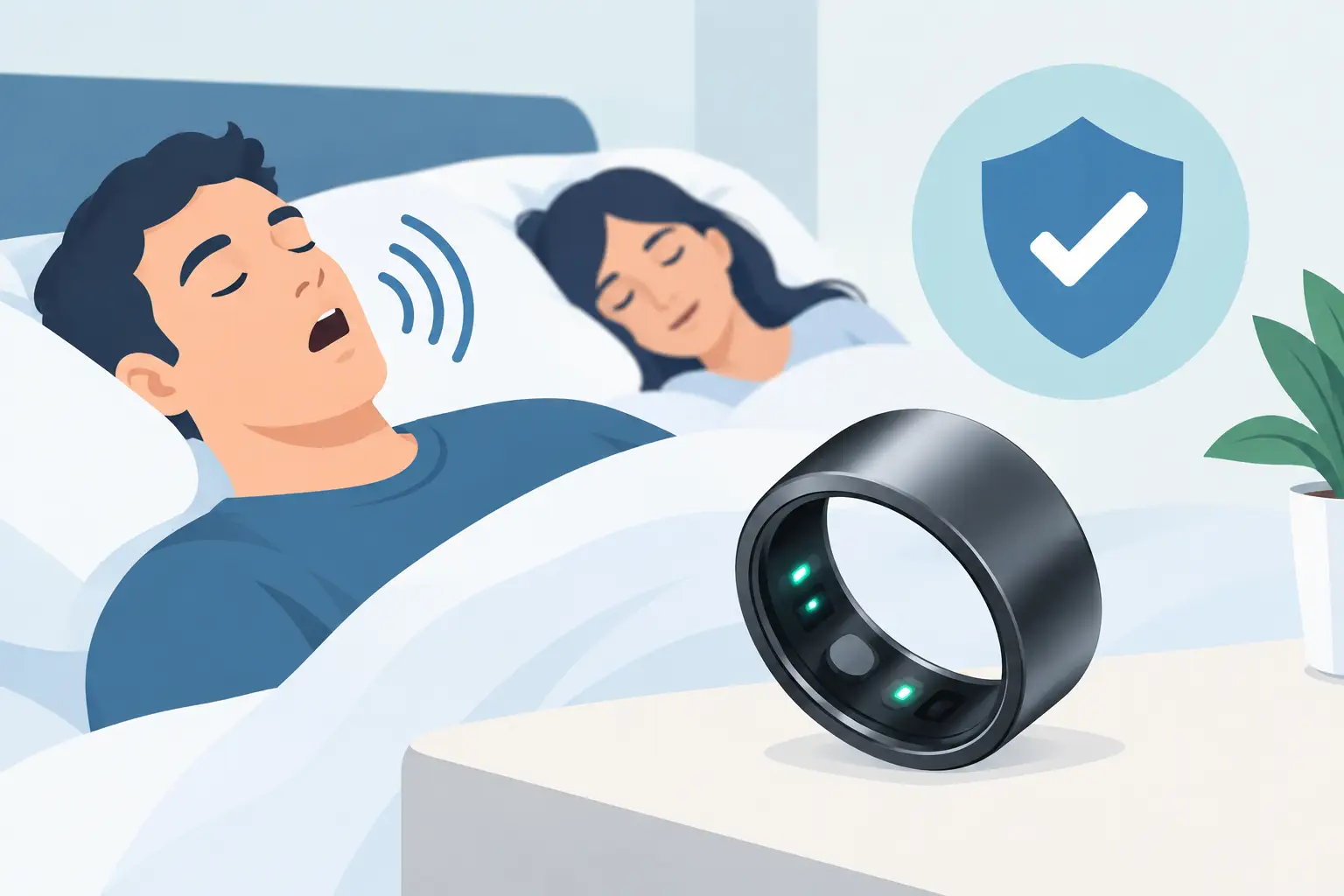
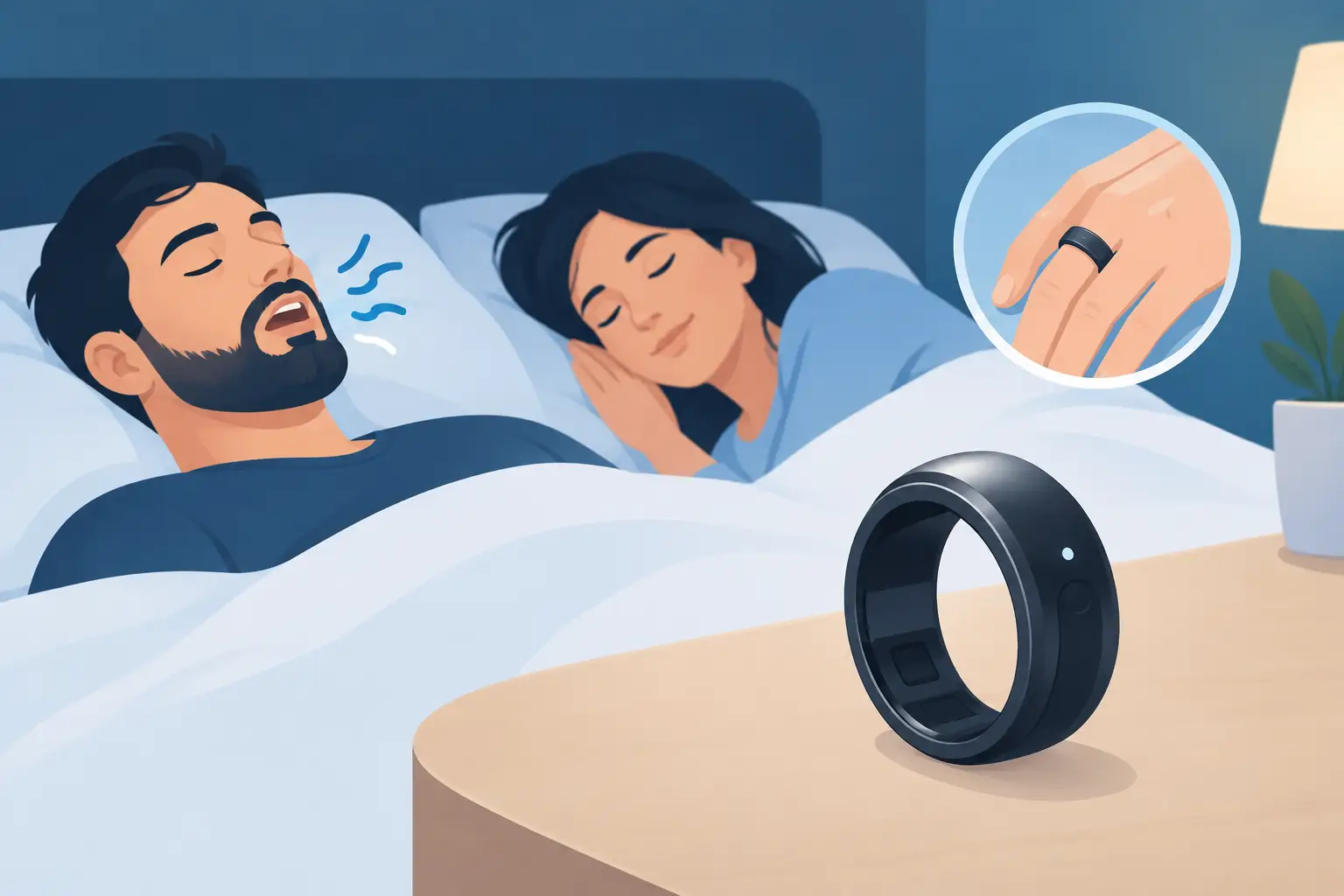
For people who want a discreet wearable alternative, acupressure rings are another non-invasive route. The Good Night Anti-Snoring Ring is the original clinically trialled stop snoring ring, designed to apply gentle pressure to specific points on the little finger while you sleep. It does not involve medication, adhesives or a mouthpiece, and its small form makes it easy to include in a normal bedtime routine.
Acupressure will not work for every snorer, and an honest solution should say so. Snoring has several causes, so results vary from person to person. What matters is choosing a quality product with clear instructions, credible evidence behind it and a proper money-back guarantee, rather than gambling on an untested copycat.
Give one change enough time to be judged fairly
It is tempting to try five remedies at once, then guess what worked. A better method is to make one or two targeted changes and track the results for a couple of weeks. Ask your partner whether the volume, frequency or duration of your snoring has changed. Notice how rested you feel in the morning too.
A simple note on your phone can be enough. Record your sleeping position, whether you drank alcohol, whether you had congestion and which remedy you used. Patterns often emerge quickly. You may find that your snoring is mild when you sleep on your side but much worse after late drinks, or that a wearable approach works best when paired with clearer nasal breathing.
Consistency is especially important with gentle, non-invasive options. The benefit may be less about one dramatic night and more about creating a reliable routine that improves sleep for both people over time.
Be careful with exaggerated snoring promises
The anti-snoring market is crowded, and desperation can make bold claims sound convincing. Be cautious of products that promise to cure every kind of snoring overnight, hide how they work or offer no meaningful return policy. Simple snoring and sleep apnoea are not interchangeable, and no responsible brand should pretend that one small product is suitable for every situation.
Look for plain explanations of what a product is designed to do, who it may suit and when to seek medical advice. If you are trying an acupressure ring, check that it is comfortable, correctly sized and made for overnight wear. If you develop pain, numbness, skin irritation or any new concern, stop using it and seek advice.
Make the bedroom a kinder place to solve the problem
Snoring can become emotionally loaded. Partners may feel exhausted and resentful, while the person who snores may feel embarrassed or defensive. It helps to treat the issue as a shared sleep problem rather than a personal failing.
Choose a calm moment during the day to agree on a plan. Decide which change to try first, how long you will test it and what would count as improvement. That turns bedtime from a source of tension into a practical experiment with a common goal: quieter nights and better mornings.
A comfortable, non-invasive option is often the most sensible place to begin, provided you stay alert to the signs that call for medical support. Better sleep does not always require a complicated device – sometimes it starts with a small change you can genuinely keep using.