Blog
Single Post
Acupressure Ring vs Chin Strap: Which Helps?
A chin strap may look like the obvious answer when snoring starts: hold the jaw closed and the noise should stop. Yet many people discover the reality at 2am – tight straps, warm fabric, pressure around the head and exactly the same snoring beside them. When comparing an acupressure ring vs chin strap, the best choice depends less on which device looks more convincing and more on why you snore in the first place.
For couples who are tired of separate bedrooms, nudging and waking unrefreshed, the goal is simple: a solution that is comfortable enough to use every night and sensible enough to try without turning bedtime into a medical procedure.
Acupressure Ring vs Chin Strap: The Core Difference
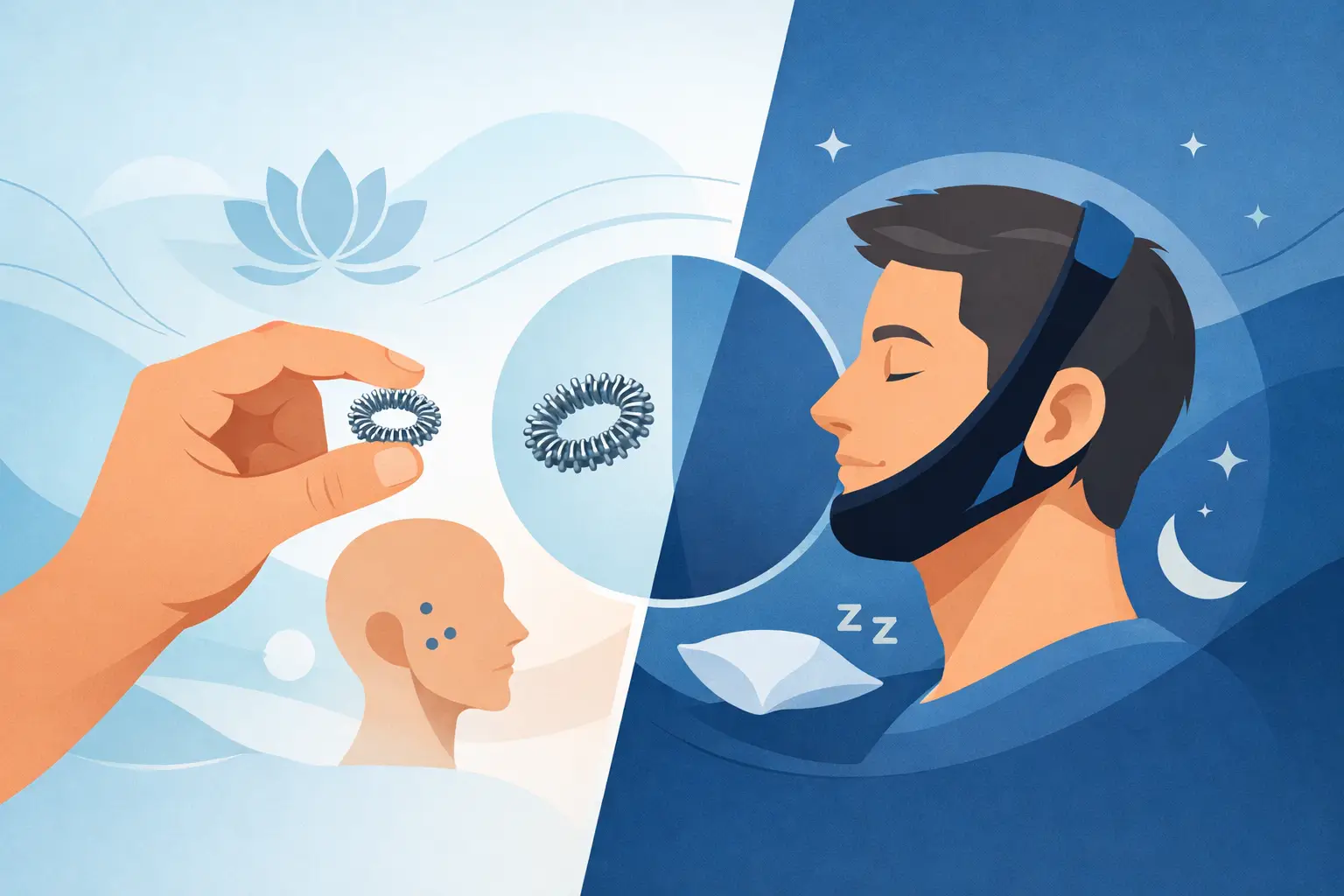
A chin strap is a fabric band worn around the chin and over the head. Its purpose is mechanical. It aims to reduce mouth opening during sleep, which can help some people who snore when their jaw drops and they begin breathing through their mouth.
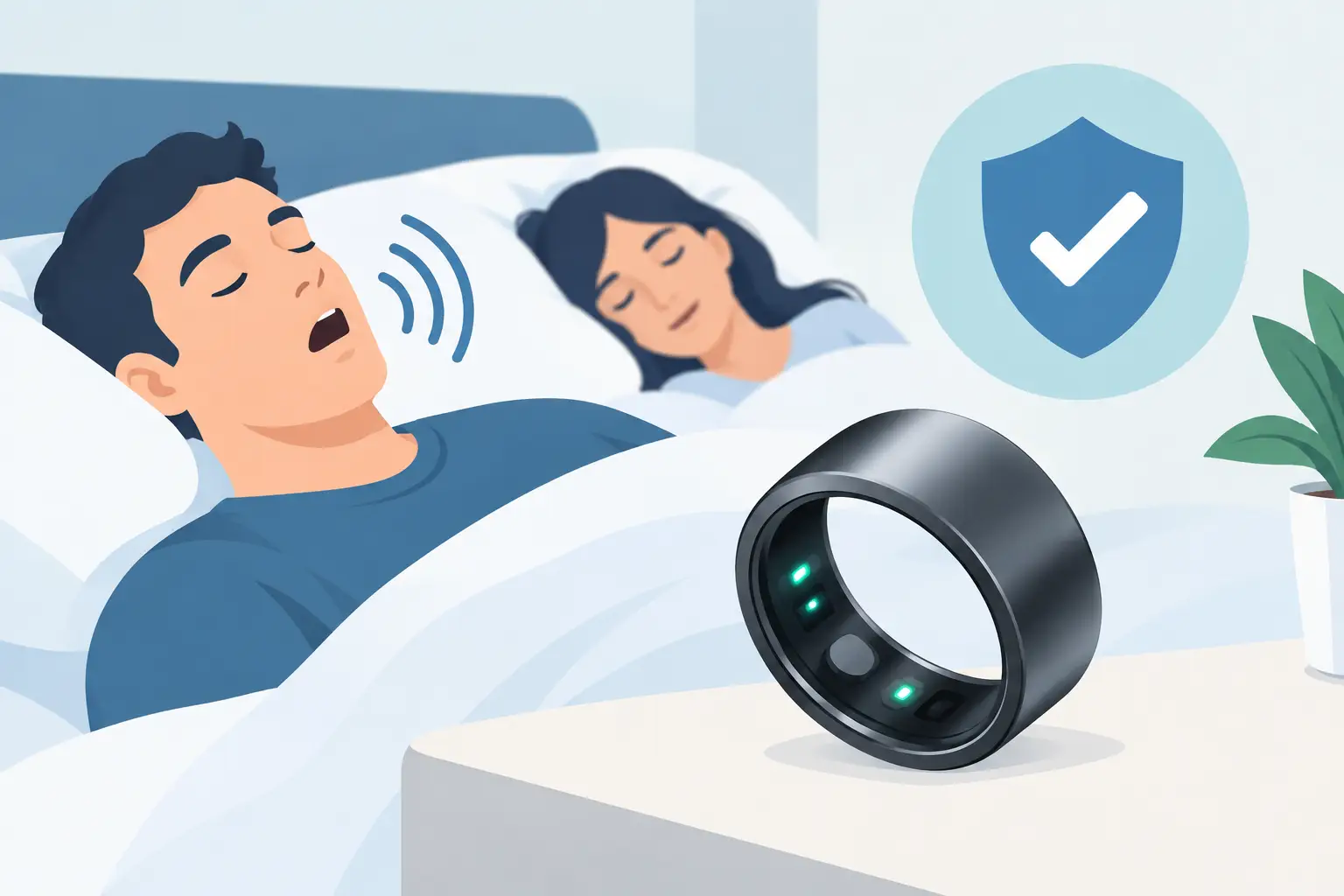
An acupressure ring takes a different approach. Worn on the little finger, it applies gentle, consistent pressure to specific acupressure points while you sleep. Rather than pulling the jaw into position, it is designed as a natural, non-invasive way to help reduce simple snoring.
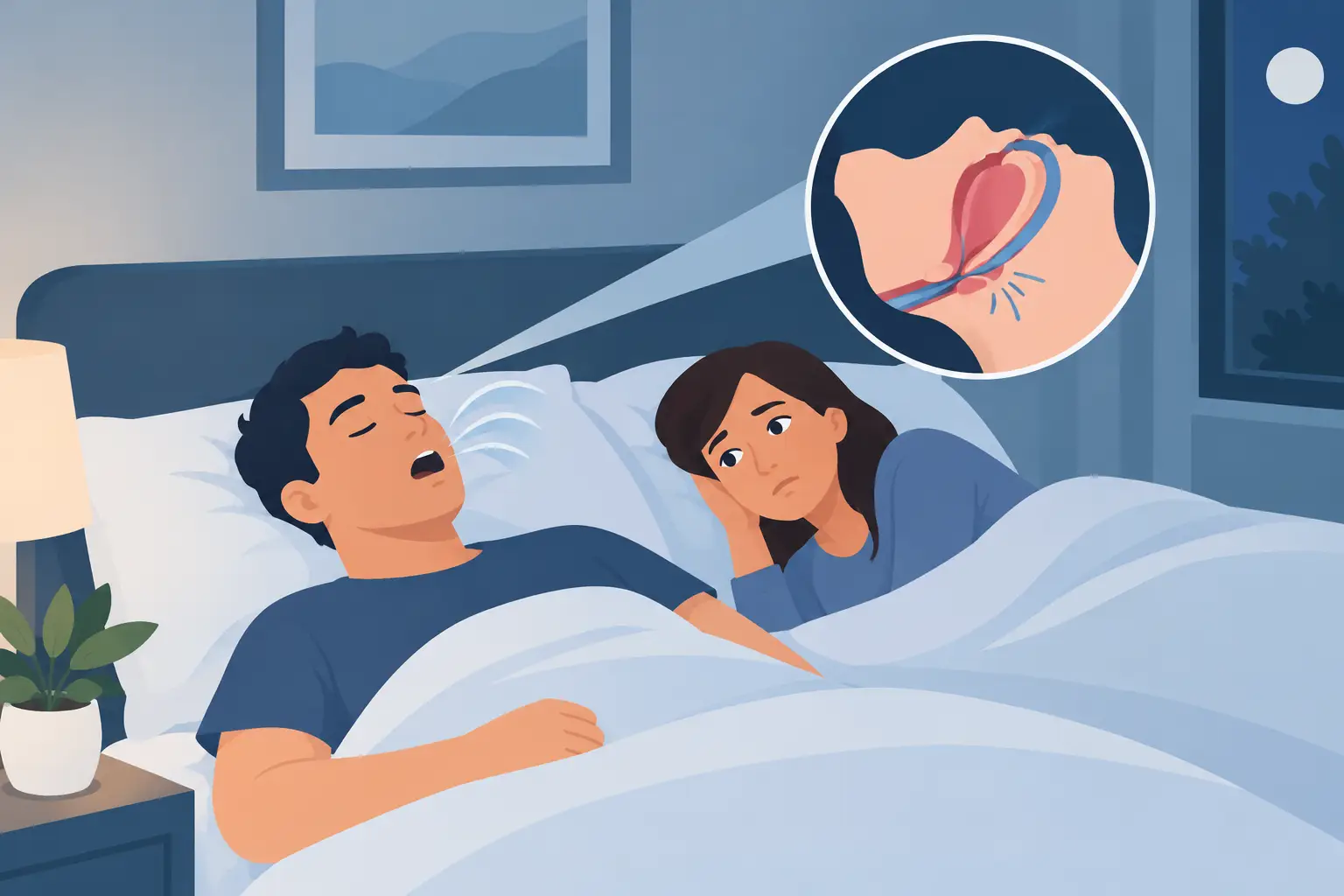
That difference matters because snoring is not one single problem. It is the sound made when relaxed tissues vibrate as air moves through a narrowed airway. For one person, an open mouth may be a major contributor. For another, the issue may be sleep position, nasal congestion, alcohol before bed, weight, or the natural relaxation of throat tissues during sleep.
A chin strap only addresses jaw position. An acupressure ring is not trying to force your mouth closed. It is a discreet wearable intended to support the body through acupressure, with no straps, batteries, medication or bulky equipment.
When a Chin Strap May Make Sense
A chin strap can be worth considering if you know you sleep with your mouth open, wake with a very dry mouth, or are using CPAP and need help keeping your mouth closed alongside your prescribed treatment. It is a familiar, low-tech option, and some sleepers find it useful for that narrow purpose.
But a chin strap is not a universal anti-snoring device. Closing the mouth does not automatically clear an obstructed nose or stop vibrations further back in the throat. In some cases, people simply breathe against the resistance of the strap or find the fit slips during the night.
Comfort is often the deciding factor. A strap needs enough tension to stay in place, but not so much that it digs into the jaw, leaves marks or causes headaches. It can also feel restrictive for people who sleep hot, move frequently, wear long hair, or dislike anything wrapped around their head.
There is another practical consideration: if your nose is blocked, deliberately keeping your mouth closed can feel uncomfortable. A chin strap should never be used to ignore ongoing nasal breathing problems or suspected sleep apnoea.
Why Some Snorers Prefer an Acupressure Ring
The appeal of an acupressure ring is its simplicity. Put it on the correct little finger before bed, and it becomes part of your normal routine. There is no adjustment around the head, no moulding process, and no need to sleep with something between your teeth.
For many people, that makes a meaningful difference. The most technically impressive anti-snoring product is of little use if it spends the night on the bedside table. A small ring is easy to pack for weekends away, quiet to wear, and far less noticeable to a partner.
Good Night Health’s original stop snoring ring is designed around this principle. It is a clinically trialled, acupressure-based option for simple snoring, made for people who want to avoid medication and intrusive night-time devices. It is also important to be honest about the limitation: no anti-snoring product works for every person, because not every person snores for the same reason.
That is why a refund-backed trial matters. It gives you room to see how the ring fits into your actual sleep routine, rather than judging it after one restless night or expecting an overnight miracle.
Comfort is not a minor detail
Snoring remedies are often bought in frustration and abandoned in discomfort. Mouthguards can feel bulky. Nasal devices can irritate. Chin straps can feel hot and constraining. An acupressure ring is not invisible, but it is deliberately minimal.
If you are sensitive to sleepwear, share a bed, or simply do not want to look as though you are gearing up for a night shift before bed, that minimal design has real value. The easier a solution feels, the more likely you are to give it a fair chance.
The trade-off: different methods, different expectations
A chin strap gives a clear physical action. You can feel that it is holding your jaw in place. Some people find that reassuring, particularly if mouth opening is an obvious issue.
An acupressure ring is subtler. It does not immobilise anything, so it may not suit someone who specifically needs help managing an open mouth during CPAP therapy. On the other hand, it avoids the pressure, heat and restrictive feeling that lead many people to stop using chin straps.
The right question is not, “Which one is strongest?” It is, “Which approach fits my type of snoring and can I comfortably use every night?”
How to Choose Between an Acupressure Ring and Chin Strap
Start with your own clues. If you regularly wake with a dry mouth and a partner notices your mouth hanging open, a chin strap may be relevant. If you have tried straps before and hated the fit, or you want a drug-free option that does not interfere with natural movement during sleep, an acupressure ring may be the more practical first choice.
Think about consistency too. Are you likely to wear a head strap on a hot night? Will it stay put if you turn onto your side? Do you travel often? A small wearable usually creates less friction in a bedtime routine than a device that needs positioning and adjustment.
It is also worth looking at the quality behind the product, not just the price. The anti-snoring market is full of products that make dramatic promises with little explanation of how they work or whether they have been properly assessed. Look for clear instructions, evidence-led claims, a stated returns policy and a company willing to say who its product is and is not for.
Be especially cautious of cheap ring imitations. A proper acupressure ring needs to be designed to apply pressure in the intended place and to remain comfortable overnight. A ring that is too loose, too tight or poorly made is unlikely to inspire confidence, let alone become part of a regular routine.
Do Not Treat Loud Snoring as Something to Simply Put Up With
Simple snoring can be disruptive and exhausting, but certain signs need medical attention rather than another consumer remedy. Speak to a GP if snoring comes with pauses in breathing, gasping or choking in sleep, severe daytime sleepiness, morning headaches, difficulty concentrating, or high blood pressure. These can be signs of obstructive sleep apnoea.
A chin strap and an acupressure ring are not treatments for sleep apnoea. Nor should they replace medical advice, prescribed CPAP, or assessment of persistent breathing symptoms. This is not about being alarmist. It is about making sure a sleep solution is being used for the right problem.
For straightforward snoring, a few habits may also help alongside your chosen device. Sleeping on your side, limiting alcohol close to bedtime, treating congestion appropriately and keeping a regular sleep schedule can all reduce the factors that make snoring worse. These changes will not solve every case, but they can make a practical difference.
A Better Night Should Not Feel Like a Battle
The acupressure ring vs chin strap decision comes down to comfort, likely cause and what you can genuinely stick with. A chin strap may help the right mouth-breathing sleeper, but it is restrictive by design. An acupressure ring offers a lighter, more discreet route for adults seeking help with simple snoring without straps, drugs or bulky devices.
Choose the option that respects your sleep as much as it addresses the noise. When a solution is comfortable enough to wear and credible enough to trust, you and your partner have a much better chance of waking up rested.