Blog
Single Post
How to Choose Anti Snoring Devices
You do not need another drawer full of failed snoring gadgets. If you are trying to work out how to choose anti snoring devices, the real question is simpler: what is causing the snoring, and what are you actually willing to wear all night?
That is where most people go wrong. They buy the loudest promise, not the most suitable option. A device can be popular, expensive, or backed by glowing reviews and still be completely wrong for your type of snoring.
How to choose anti snoring devices without wasting money
Start with honesty. Snoring is not one single problem. It can be linked to mouth breathing, tongue position, nasal blockage, sleeping on your back, weight, alcohol before bed, or general relaxation of the airway during sleep. The best device is the one that matches the likely cause and feels realistic enough to use consistently.
If your snoring is occasional and linked to colds, allergies, or a few drinks, you may not need a heavy-duty solution at all. If it is nightly, loud, and affecting your partner’s sleep, comfort and consistency matter more than novelty. There is no point buying something clinically impressive if it sits on the bedside table after two nights.
The other point to keep in mind is that anti-snoring devices are for simple snoring unless stated otherwise. If you stop breathing in your sleep, wake choking, gasp at night, or feel exhausted despite a full night’s rest, you should speak to a medical professional. A snoring device is not a substitute for proper assessment where sleep apnoea may be involved.
The main types of anti-snoring devices
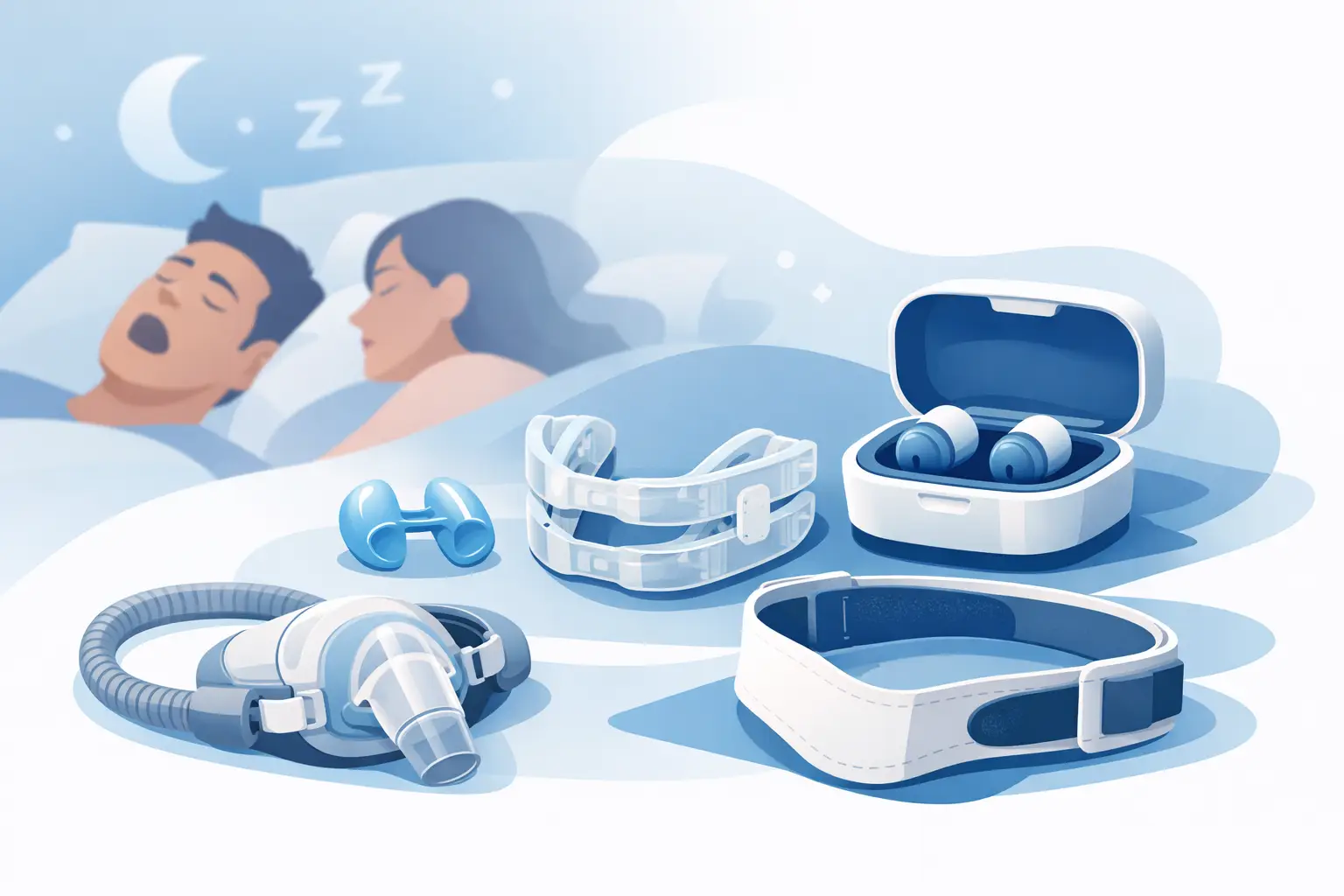
Most products fall into a few broad groups, and each comes with trade-offs.
Mouthpieces and mandibular advancement devices
These are designed to hold the lower jaw slightly forward, which can help keep the airway more open. For some people, especially those whose snoring comes from airway collapse at the back of the mouth, they can be effective.
The catch is comfort. Many people find them bulky, awkward, or difficult to tolerate for a full night. They can also cause jaw soreness, tooth discomfort, excess saliva, or dry mouth. If you already clench your jaw or have dental issues, they are not always the obvious choice.
Tongue-retaining devices
These aim to stop the tongue falling backwards during sleep. In theory, they target a clear cause of snoring. In practice, some users find them even less comfortable than mouthguards.
They can feel intrusive, and that matters. A device only works if you actually use it.
Nasal strips and nasal dilators
These help when snoring is driven by nasal congestion or narrow nasal passages. They are straightforward, non-invasive, and often a reasonable first step if you know your nose is the issue.
But they are limited. If your snoring comes from the throat or tongue rather than the nose, these products may do very little. They are useful for the right problem, not every problem.
Positional devices
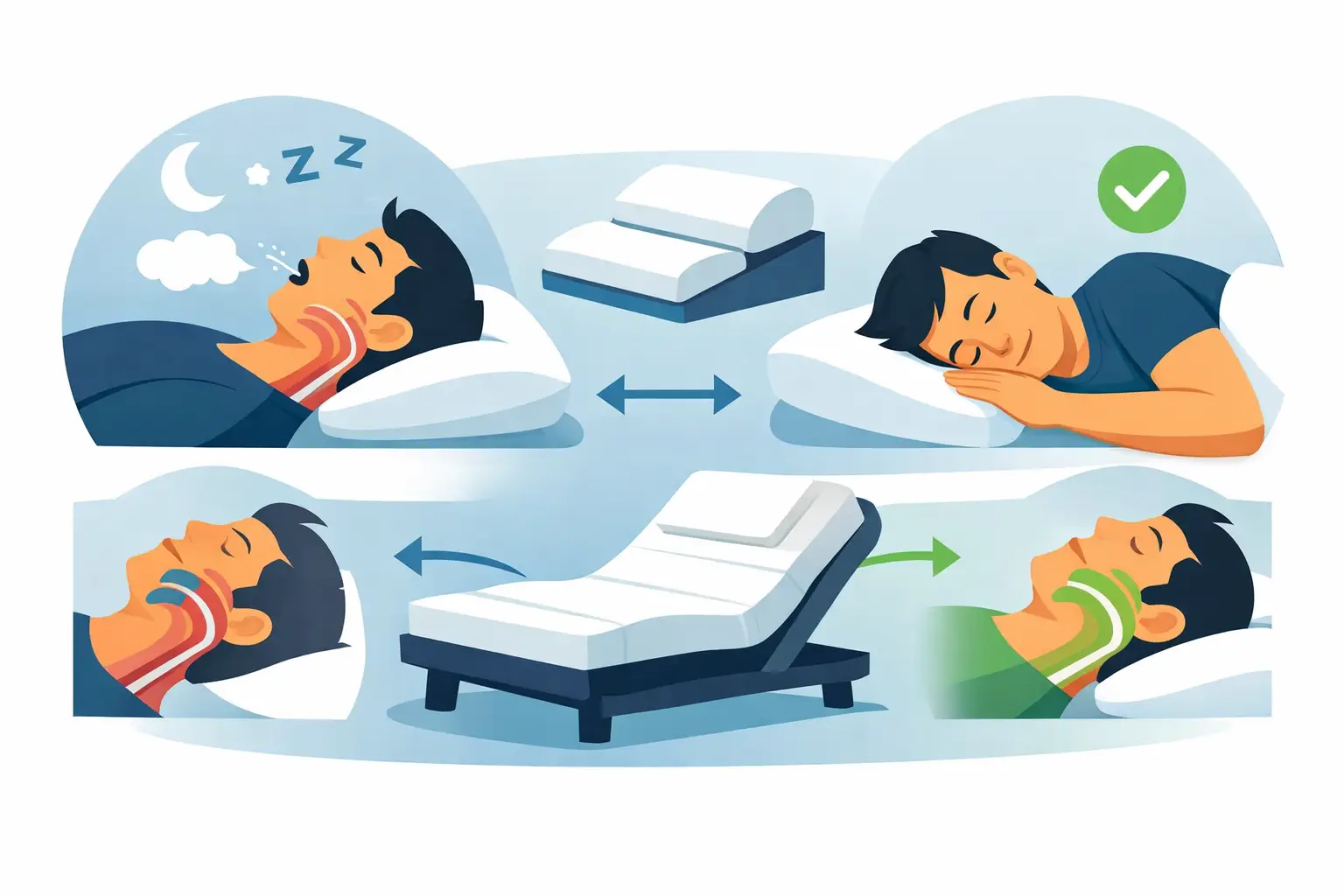
Some people snore mainly when lying on their back. Positional devices are meant to encourage side sleeping. That can be as simple as a wearable prompt or a specially designed support.
These can work well if back-sleeping is the trigger, but they are not universal fixes. If you snore in every position, they may only partly reduce the noise.
Non-invasive wearable options
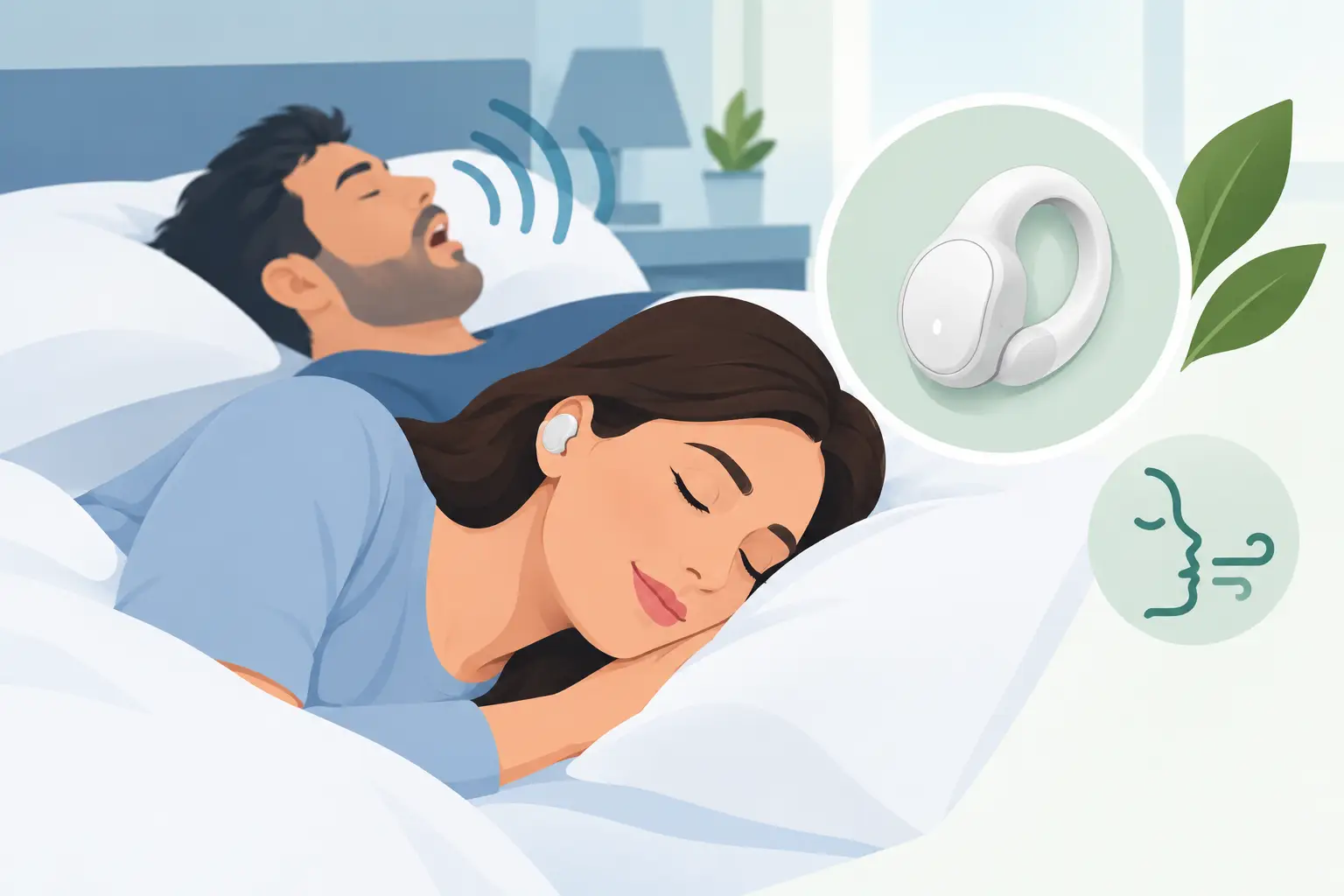
This is where many people start looking once they are tired of bulky solutions. Wearable devices that do not go in the mouth appeal because they are simpler, more discreet, and easier to stick with.
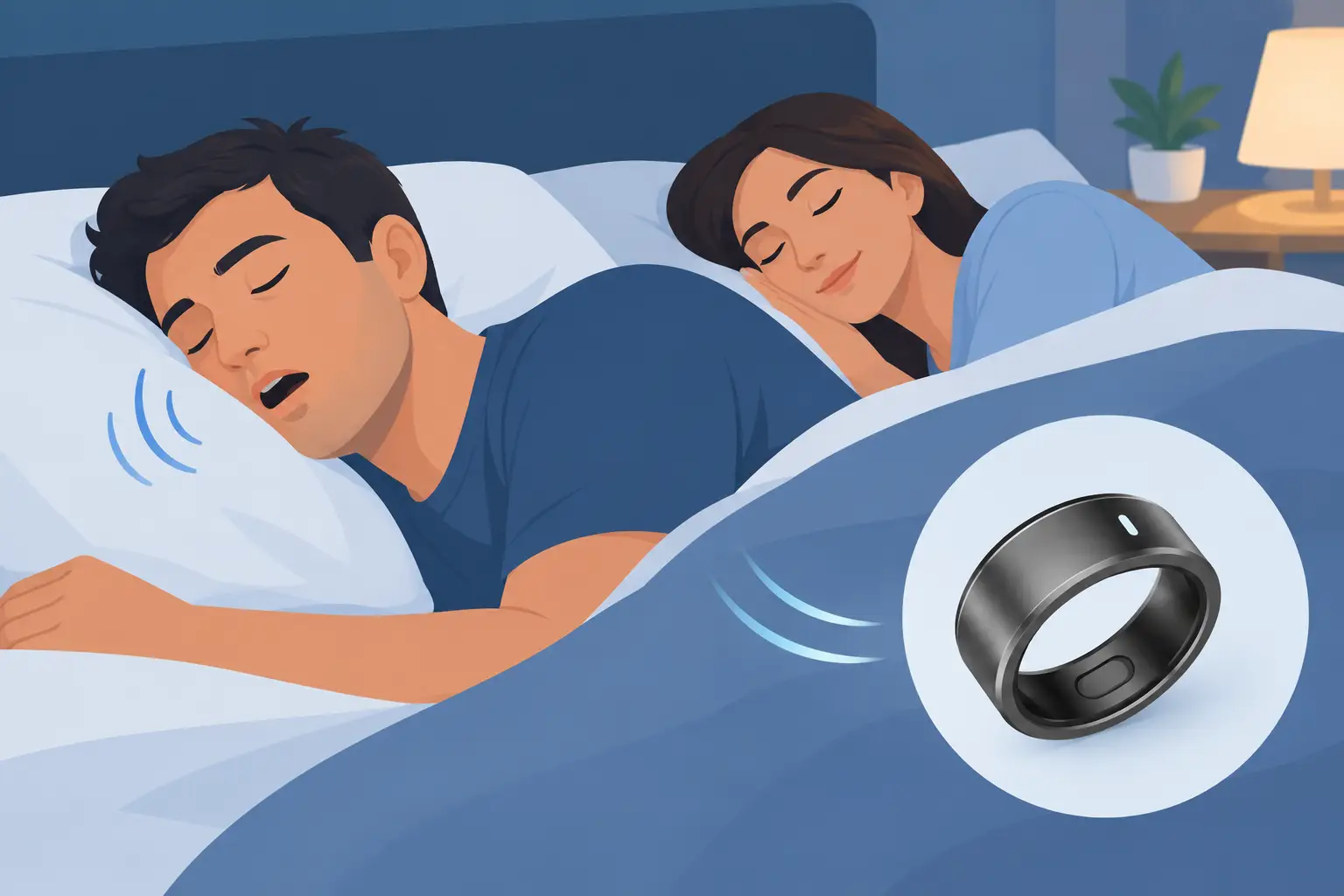
An acupressure-based ring, for example, offers a different route. Instead of forcing the jaw forward or attaching something to the nose, it is worn on the little finger overnight. For people who want a natural, fuss-free option and have already had enough of uncomfortable night-time gear, that can be a far better fit. Good Night Health positions its ring around exactly that need: simple snoring support, clinically trialled credentials, and a full refund guarantee for peace of mind.
Match the device to your real-life habits
One of the best ways to decide is to think less like a shopper and more like the person who has to wear the thing at 2am.
If you hate anything in your mouth, a mouthpiece is a poor bet however strong the claims look. If you often travel, a complicated setup with multiple parts may quickly become irritating. If your partner wants an answer now, you need something straightforward that you can begin using immediately, not a device that requires endless adjustment.
This is where simplicity has genuine value. The more intrusive a solution feels, the more likely you are to abandon it. Many snorers do not need the most aggressive option. They need the one they will use every night.
What to look for before you buy
When comparing products, trust signals matter. So does restraint. Be wary of anything that claims to work for every snorer in every situation.
A better product page or pack will tell you what the device is for, who it may suit, and where its limits are. That kind of honesty is usually a good sign. Look for evidence such as clinical trials, regulatory clearance where relevant, and a sensible refund policy. A 30-day money-back guarantee is not just a sales line. It tells you the company expects some buyers to test the product properly at home rather than gamble on hype.
It is also worth checking whether you are looking at an established original product or a copycat. In crowded markets, cheaper imitations often mimic the appearance of a successful item without matching the quality, materials, or proof behind it. If a device looks suspiciously similar to a better-known option but offers little detail beyond a low price, pause there.
How to choose anti snoring devices for comfort and consistency
Comfort is not a soft extra. It is one of the main predictors of whether a product will help at all.
A device that is mildly effective but easy to wear may give you better long-term results than one that works brilliantly in theory and feels dreadful after an hour. That is especially true for couples. The goal is not to win an argument on paper about the most advanced design. The goal is a quieter night and less resentment by morning.
Discretion matters too. Some people do not want a visible or cumbersome product beside the bed, particularly when sharing a room or travelling. A small wearable can feel more manageable than a moulded appliance, even if both are aimed at the same broad problem.
Red flags that should make you cautious
Some warning signs are easy to miss. If a product relies on exaggerated before-and-after promises, offers no clear explanation of how it works, or avoids any mention of who it may not suit, be careful.
The same goes for products with endless testimonials but no meaningful product detail. Reviews can be useful, but they are not a substitute for proper information. You want a clear description, realistic expectations, and proof that the business stands behind the device if it does not help.
Also consider hygiene and practicality. If cleaning is fiddly, parts are easy to lose, or the product needs frequent replacing, the true cost may be higher than it first appears.
A sensible way to decide
If your snoring seems mainly nasal, start with a nasal option. If it clearly worsens on your back, a positional solution may be enough. If you suspect your jaw or tongue position is involved and you can tolerate oral devices, a mouthpiece may be worth considering.
But if you want something non-invasive, discreet, and easier to live with, a wearable ring-style option deserves a serious look. That is particularly true if you have tried mouthguards before and given up because they felt too bulky or uncomfortable.
The best choice is rarely the one with the biggest promise. It is the one that fits your kind of snoring, your tolerance for night-time devices, and your willingness to use it consistently for more than a few days.
Give yourself permission to choose practicality over drama. Better sleep usually starts that way.