Blog
Single Post

Stop Snoring Ring vs Spray: Which Works Better?
The difference between a peaceful night and another nudge in the ribs often comes down to what you are willing to use every evening. When comparing a stop snoring ring vs spray, both options sound refreshingly simple. Neither requires a bulky mouthguard or a machine beside the bed. But they work in very different ways, and the better choice depends on why you snore.
A spray is applied to the mouth, throat or nose shortly before bed. A snoring ring is worn on the little finger overnight. One relies on a short-lived coating or moisturising effect; the other uses gentle acupressure at specific points while you sleep. Before spending money on either, it helps to know what each can realistically do.
Stop snoring ring vs spray: the key difference
Most anti-snoring sprays are designed to lubricate tissues in the throat or mouth, or to ease nasal dryness and congestion. The theory is straightforward: if dry, irritated tissues are vibrating less, snoring may become quieter. Some nasal sprays also aim to improve airflow through a blocked nose.
That can be useful when your snoring is clearly linked to a cold, seasonal allergies, dry indoor air or a temporarily stuffy nose. In those situations, treating the immediate irritation makes sense. The limitation is that a spray does not usually address the wider causes of simple snoring, such as relaxed throat tissues or the way your airway behaves once you are asleep.
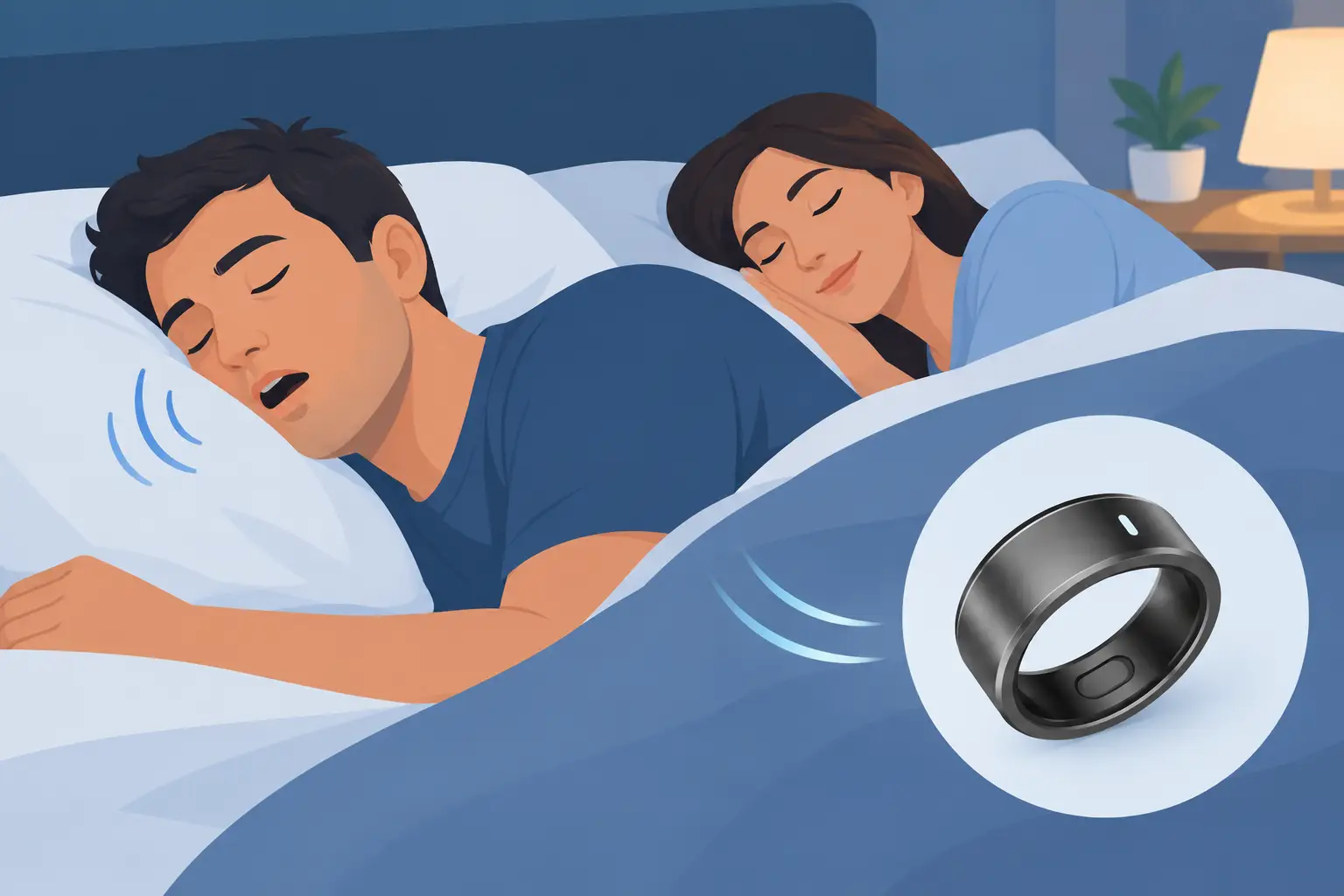
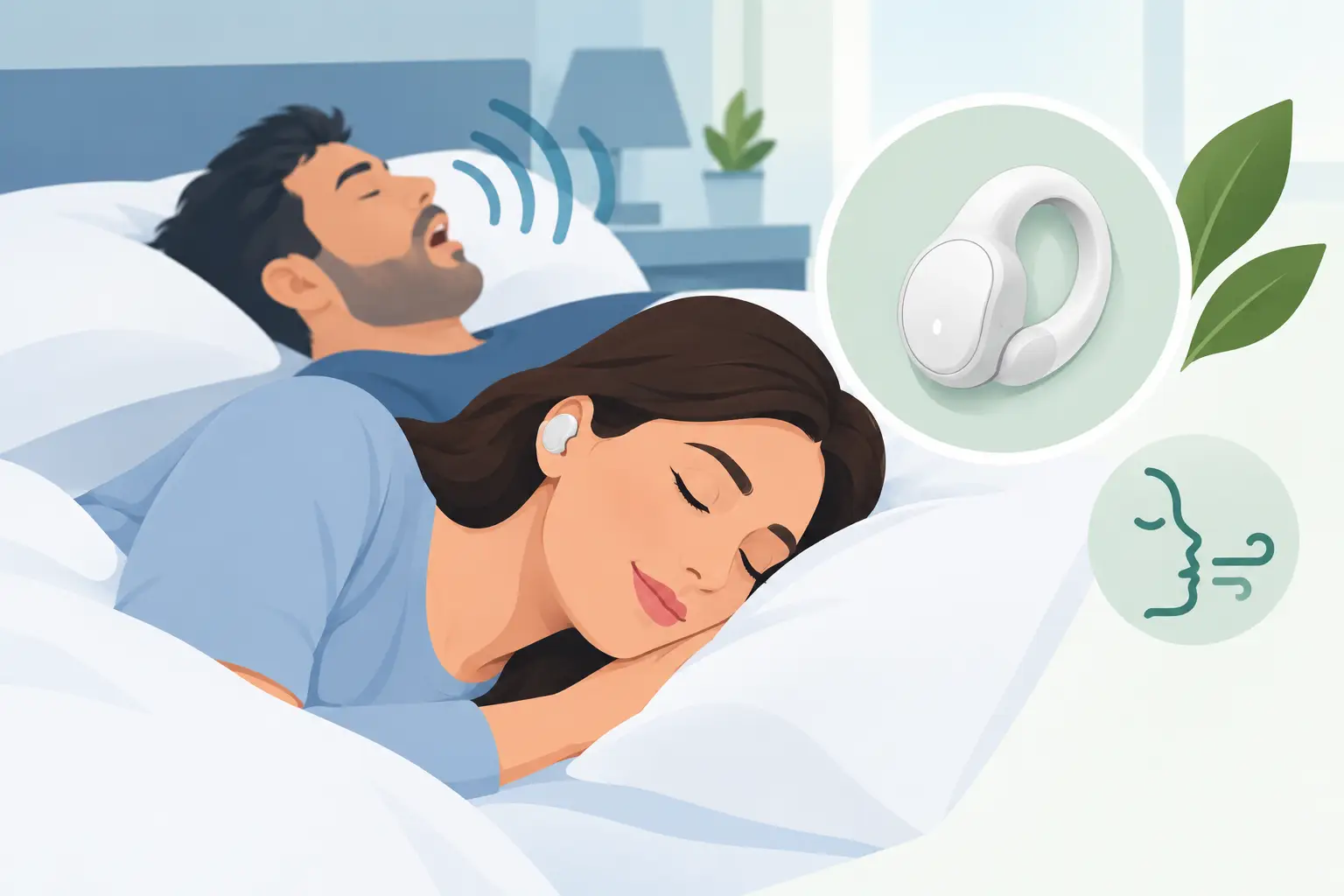
A stop snoring ring takes a different route. It is a small wearable placed on the little finger, applying gentle pressure to recognised acupressure points throughout the night. There is nothing to swallow, no taste at bedtime and no medication. The aim is to support a quieter night without putting anything in your mouth or nose.
For couples, that practical difference matters. A spray may be easy to try, but it can become one more bottle on the bedside table, one more routine to repeat, and one more thing to replace. A ring is simply put on before bed and removed in the morning.
When a spray may be the sensible first choice
Sprays should not be dismissed. They can be a reasonable short-term option if nasal congestion is the obvious trigger. If you only snore during hay fever season, after a cold, or when the heating has made the bedroom air uncomfortably dry, a suitable nasal or throat product may offer some relief.
The key is to check exactly what is in it. Some products are marketed as natural, while others contain active ingredients that may not suit everyone or may be unsuitable for prolonged use. Decongestant nasal sprays, for example, are not generally intended as an indefinite nightly habit. Read the label, follow the instructions and speak to a pharmacist or clinician if you take other medicines, are pregnant, or have a health condition.
Sprays also tend to be most dependent on consistency and timing. Use too little, use it too early, or sleep with your mouth open after using a nasal spray, and the result may be disappointing. If your partner reports that the noise varies little whether you use a spray or not, that is useful information: congestion may not be the main issue.
Why many people prefer a snoring ring
The appeal of a ring is not that it is a miracle for every kind of snoring. No honest anti-snoring product can make that promise. Its appeal is that it is non-invasive, discreet and free from drug-based ingredients. For people who have rejected mouthpieces because they feel intrusive, or sprays because they dislike the taste and repeat purchases, that is a meaningful advantage.
A well-made ring should also be comfortable enough to wear through the night. Fit matters. It needs to sit securely on the little finger so the acupressure points are contacted, without feeling painfully tight or leaving you distracted by it. It may take a few nights to get used to wearing any jewellery in bed, especially if you normally remove rings before sleeping.
The original stop snoring ring from Good Night Health is clinically trialled and FDA cleared in the US. It is designed specifically for simple snoring and backed by a 30-day money-back guarantee. That guarantee matters because response is individual. Rather than asking you to accept a vague promise, it gives you time to assess the ring in your own bed, with the person who hears your snoring most clearly.
Cheap copycat rings can look similar at first glance, but appearance alone does not tell you whether the pressure points, materials, sizing or product claims have been properly considered. When you are wearing something for seven or eight hours at a time, comfort, quality and a clear returns policy are not minor details.
Comfort, cost and convenience over time
On a single evening, a spray may be cheaper. Over several weeks or months, the calculation can change because bottles need replacing. That does not automatically make sprays poor value, particularly if you only need them occasionally. But if snoring is a nightly problem, ongoing purchases are worth factoring in.
A ring is a one-time wearable rather than a consumable. There is no bedtime application, no risk of a medicinal aftertaste, and no concern about leaking bottles when travelling. It is also easier to use when you are tired. Put it on, settle down and let your normal bedtime routine continue.
Comfort is more personal. Some people prefer a spray because they do not like wearing rings. Others find that placing a product in the throat or nose every night feels far more bothersome than a lightweight finger ring. If you have sensitive skin, check the ring materials. If you tend to have a dry mouth, a throat spray may feel soothing but still not be enough to change the underlying snoring pattern.
Which option is more likely to help your snoring?
Start with the pattern, not the packaging. A spray may be the more logical choice if you can identify a temporary nasal cause. A ring may be the more suitable option if your snoring is regular, you want a natural non-invasive approach, and you do not want to rely on a liquid product night after night.
It is also reasonable to use common-sense measures alongside either option. Sleeping on your side, limiting alcohol close to bedtime, treating known allergies appropriately and keeping a regular sleep routine can all make a difference for some people. These are not glamorous solutions, but snoring rarely has one single explanation.
Give any remedy a fair test. Your partner can help by noting not only volume but frequency: was the snoring shorter, less intense or absent for part of the night? Keep the conditions similar where possible. Comparing one night after a late meal and drinks with another after an early quiet evening will not tell you much about the product.
Do not treat every snore as simple snoring
A snoring ring or spray is not a substitute for medical advice where warning signs are present. Speak to a GP if there are pauses in breathing, choking or gasping in sleep, severe daytime tiredness, morning headaches, high blood pressure, or snoring that has become markedly worse. These can be signs of obstructive sleep apnoea, which needs proper assessment.
This is especially important when a partner notices breathing pauses that the snorer does not remember. Better sleep is the goal, but safety comes first. A credible product should be clear about the boundary between support for simple snoring and symptoms that need clinical attention.
Make the choice that you will actually stick with
The best anti-snoring option is rarely the one with the boldest claim. It is the one that suits your likely trigger, feels comfortable enough to use consistently and does not create a new bedtime frustration. If congestion is plainly behind your snoring, a carefully chosen spray can be a practical short-term aid. If you want a discreet, medication-free option for ongoing simple snoring, a clinically trialled ring is often the more appealing place to start.
Quieter nights do not need to begin with a complicated device or another uncomfortable compromise. Choose a solution you can use calmly, give it a fair chance, and let both sides of the bed judge the difference.